What Is Security Information and Event Management (SIEM)?

Written By
Sarwat Iftikhar
Security teams have always faced a visibility problem. Logs from firewalls, endpoints, identity platforms, applications, and cloud workloads accumulate continuously across the environment, each holding a fragment of what is actually happening at any given moment. Individually, those fragments are noise. Correlated against each other and analyzed against known threat patterns, they become the evidence base that separates a meaningful security event from the background.
SIEM was built to centralize that visibility. It collects log and event data from across the environment, normalizes it into a common format, and applies detection rules to surface the patterns that indicate threat activity. The result is a platform that gives security operations teams a single location from which to monitor, investigate, and report on what the environment is telling them.
This post covers how SIEM works, what it detects, where it sits relative to SOAR and XDR, what its structural limitations are, and what to evaluate when deciding whether a SIEM deployment is the right fit for your program’s current maturity.
Key Takeaways
- SIEM stands for Security Information and Event Management: a platform that aggregates log and event data from across the environment and applies correlation rules to detect threat patterns.
- SIEM is a detection and visibility layer. It generates alerts but does not automate response. Response execution is handled by a SOAR platform or by analyst action.
- Detection quality in a SIEM depends entirely on the quality and completeness of the logs feeding it and the rules applied to them.
- SIEM is not a substitute for behavioral endpoint detection, identity threat monitoring, or proactive security validation through testing.
- SIEM works best as a centralized monitoring and compliance layer integrated with EDR, SOAR, ITDR, and other detection tools.
What Does a SIEM Platform Actually Do?
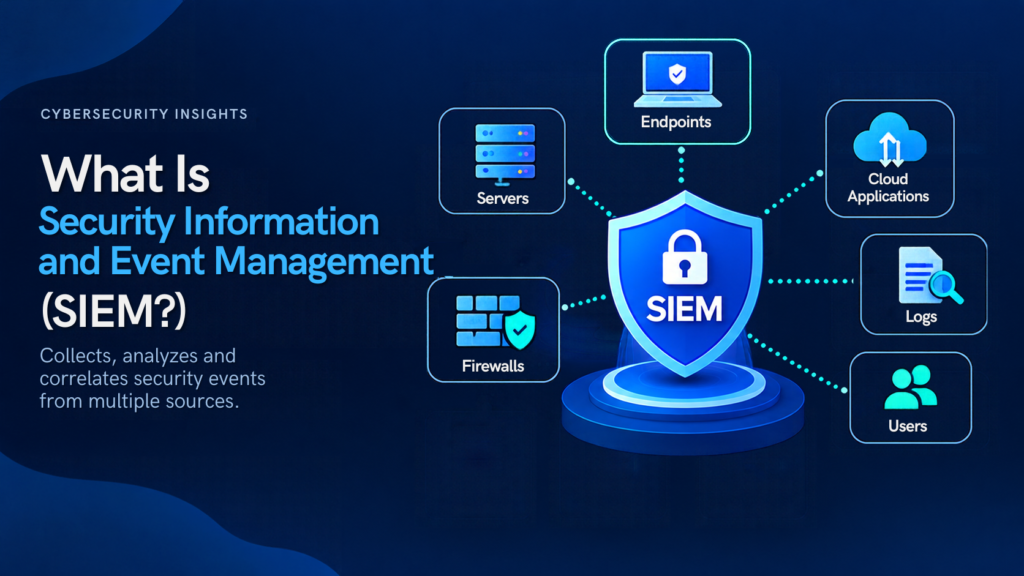
SIEM is a security platform that collects log and event data from every system across an environment, normalizes it into a consistent format, applies detection logic to identify patterns associated with threat activity, and generates alerts for analyst review. It functions as the central point where data from the entire environment is aggregated, correlated, and surfaced for investigation.
The platform serves two distinct functions that are closely related but operationally separate.
Security information. This is the aggregation and management side. SIEM collects logs from firewalls, endpoints, servers, identity directories, applications, and cloud workloads. It normalizes that data so disparate systems speak the same language within the platform, stores it for forensic investigation and compliance reporting, and makes it searchable. A SIEM that is well-instrumented gives analysts visibility into virtually every event that touches the environment.
Event management. This is the detection side. SIEM applies correlation rules, behavioral baselines, and threat intelligence indicators to the aggregated data, looking for sequences of events that match known attack patterns, policy violations, or anomalous activity. When the correlation engine finds a match, it generates an alert. The quality of what the event management layer surfaces depends entirely on the quality and completeness of the rules applied to it.
In Bugstrix’s assessment work, organizations that treat SIEM as a finished product rather than a living platform tend to see detection quality degrade over time. Rules written for yesterday’s environment and threat landscape eventually generate either noise or silence, neither of which serves the team relying on the platform.
How Does SIEM Work?
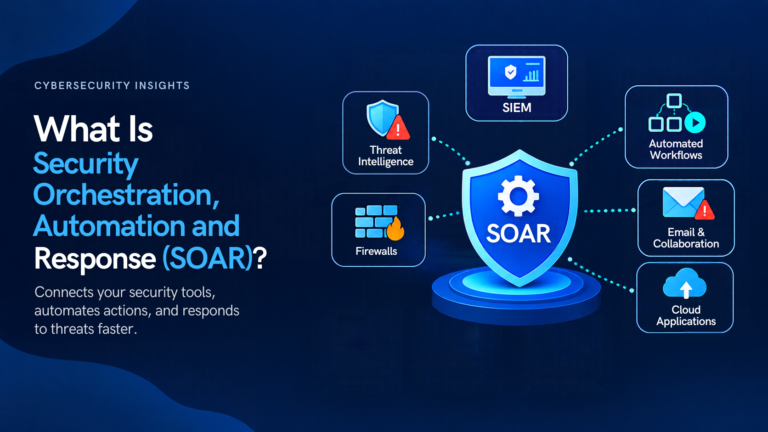
SIEM operates as a data pipeline: logs and events are collected from connected sources, processed into a normalized format, analyzed against detection rules, and surfaced as alerts or dashboards for analyst investigation.
The core stages of a SIEM pipeline:
| Stage | What Happens |
| Log Collection | Agents or API integrations pull data from endpoints, firewalls, identity systems, cloud workloads, and applications |
| Normalization | Raw logs are parsed and mapped into a consistent data schema regardless of the source format |
| Correlation | The detection engine applies rules, behavioral baselines, and threat intelligence to identify event patterns |
| Alerting | Matched patterns generate alerts with severity scores and contextual data for analyst triage |
| Storage | All ingested data is retained for compliance reporting, historical search, and forensic investigation |
| Reporting | Dashboards and scheduled reports surface metrics for compliance mandates and program oversight |
SIEM detection rules range from simple threshold logic (more than ten failed login attempts in five minutes) to complex multi-source correlation that links events across endpoints, network flows, and identity data to reconstruct an attack sequence. Vulnerability management data is frequently integrated as a correlation input, allowing SIEM to weight alerts higher when a matched indicator involves an asset with known, unpatched exposure.
What Can SIEM Detect?
SIEM detection capability is a direct function of what logs are being collected and how well the detection rules are tuned for the threat patterns relevant to the specific environment. At its strongest, SIEM surfaces authentication anomalies, policy violations, known threat indicator matches, and compliance-relevant events across the full environment.
Authentication anomalies. Repeated authentication failures, successful logins from unexpected geographies, access outside business hours, privilege escalation sequences, and anomalous service account activity are among the clearest log signatures in most environments. SIEM is well-suited to detecting these because the event patterns are consistent and relatively rule-friendly. These authentication patterns overlap significantly with what identity threat detection and response (ITDR) surfaces at a deeper identity layer, and integrating the two provides materially stronger coverage of account-based attacks.
Policy violations. SIEM enforces visibility into behavioral policy: unauthorized software execution, access to restricted data stores, changes to privileged group membership, firewall rule modifications, and configuration deviations. These events generate discrete log entries that correlation rules can reliably detect.
Threat intelligence indicator matches. SIEM ingests threat intelligence feeds and flags connections to known-bad IP addresses, domains, and file hashes. This is effective against known threat infrastructure but provides no protection against novel or infrastructure-independent attack techniques.
Compliance-relevant events. Data access logs, administrator activity, configuration changes, and system access records are captured and retained by SIEM to satisfy audit requirements across frameworks including PCI-DSS, HIPAA, ISO 27001, and SOC 2.
Multi-source correlation. SIEM’s most powerful detection mode links events from different sources to reconstruct an attack chain. A failed external authentication, followed by a successful VPN login from the same IP minutes later, followed by lateral movement on the internal network, is a pattern no single log source would surface, but that correlation across three sources makes it visible.
How Is SIEM Different From SOAR and XDR?
SIEM, SOAR, and XDR address related but distinct problems in a detection and response program, and the distinction matters for understanding where each delivers value and where it depends on the others.
SIEM is a detection and visibility layer. It ingests logs, correlates events, and generates alerts. It has no native response capability: when an alert fires, an analyst must act on it, or a connected SOAR platform must execute the response workflow. SIEM answers the question of what happened and where. It does not take action on that answer.
XDR collects behavioral telemetry from endpoints, network sensors, and cloud workloads rather than log data. Where SIEM correlates log events, XDR correlates behavioral signals and applies machine learning to surface threats that rules-based log analysis would miss. XDR can also execute response actions natively within its connected ecosystem. SIEM has broader source coverage because any system that generates logs can feed it, but it has shallower detection depth for behavioral and in-memory threats.
SOAR is a response execution layer, not a detection layer. It consumes alerts from SIEM, XDR, EDR, and other tools, automates enrichment and triage, and executes response playbooks. SIEM feeds SOAR; SOAR acts on what SIEM surfaces. Most mature programs run all three: SIEM for centralized log management and compliance, XDR for behavioral detection depth, and SOAR for response automation across the connected stack.
How Does SIEM Integrate With EDR, MDR, and ITDR?
SIEM delivers the most complete visibility when connected to tools that provide higher-fidelity signal at specific layers of the stack. The integrations that matter most in a functioning security program are endpoint detection, managed detection and response, and identity threat monitoring.
SIEM and EDR. Log-based endpoint data gives SIEM broad coverage but limited depth: process execution chains, parent-child relationships, and in-memory behaviors that indicate active exploitation are visible to an EDR platform but rarely captured in system logs. Integrating EDR alerts into SIEM allows the correlation engine to link behavioral endpoint signals with broader environment events, significantly improving detection quality for post-exploitation activity.
SIEM and MDR. A managed detection and response (MDR) provider typically uses SIEM as a core component of its monitoring infrastructure, applying analyst expertise to tune detection rules, investigate alerts, and maintain the platform in ways that in-house teams often lack the capacity to sustain. For organizations without a dedicated security operations team, MDR effectively delivers SIEM capability as a managed service without requiring the platform investment and the engineering overhead that comes with it.
SIEM and ITDR. Identity-layer attacks frequently leave log signatures that SIEM can detect, but only if the right data sources are connected and the right rules are in place. ITDR signals fed into SIEM extend visibility into identity-specific attack patterns: credential stuffing sequences, impossible travel events, token manipulation, and privilege abuse that spans multiple systems simultaneously.
What Are the Limitations of SIEM?
SIEM is one of the most widely deployed security platforms in enterprise environments and one of the most consistently under-delivering investments when organizations fail to account for its structural limitations before and after deployment.
Detection quality depends entirely on rule quality. SIEM surfaces what its correlation rules are written to find. Rules that were accurate for last year’s attack patterns, built for a different environment’s architecture, or never tuned for false positive reduction will either miss real threats or overwhelm analysts with noise. The platform does not improve its own detection logic; that work is continuous and requires dedicated security engineering effort.
Log coverage gaps produce visibility gaps. SIEM sees only what is being logged. Systems without log forwarding configured, cloud workloads with incomplete coverage, and applications that generate insufficient event data create blind spots that the platform has no way to surface or flag. Bugstrix penetration testing services regularly find post-exploitation activity that would have been invisible to the SIEM in the target environment because the affected systems were not generating the relevant log data.
SIEM cannot detect what logs do not capture. Fileless attacks that execute entirely in memory, living-off-the-land techniques that abuse legitimate system tools, and credential-based lateral movement that authenticates normally all appear as routine log events. These are the techniques that operationally stealthy attackers use deliberately, and rules-based log correlation is poorly positioned to detect them.
Alert fatigue is a structural risk. SIEM deployments that ingest high log volumes with insufficiently tuned rules generate large alert queues. When analyst teams cannot work through the queue faster than it grows, real threats are missed. The coverage that SIEM is supposed to provide becomes nominal.
SIEM does not respond. SIEM generates alerts. It does not isolate endpoints, disable accounts, or execute containment steps. The gap between alert generation and analyst response is where threat actors continue operating, and in environments without SOAR automation, that gap can extend to hours.
Get a free quote for a penetration test that shows what your SIEM would miss.
Does Your Organization Need a SIEM?
SIEM is a foundational investment for most organizations operating at enterprise scale, running compliance programs, or managing a security operations function of any size. The question is less often whether to deploy SIEM and more often whether the organization is positioned to get value from the deployment rather than simply checking a compliance box.
Organizations that are well-positioned for SIEM deployment include those with compliance obligations that require centralized log retention and audit trails, security teams with the engineering capacity to build and maintain detection rules on an ongoing basis, and programs that are ready to connect SIEM output to a SOAR platform or MDR provider for response execution.
Organizations where SIEM deployment should be preceded by foundational work include teams without the capacity to tune detection rules and manage alert queues, where raw SIEM output will create more noise than signal. A Bugstrix security assessment frequently reveals that the most significant visibility gaps are in systems not currently feeding the SIEM, and investing in platform expansion before closing those gaps extends the blind spot rather than reducing it. For programs where the goal is behavioral threat detection depth rather than log correlation, EDR or XDR investment typically delivers stronger coverage per dollar before a full SIEM deployment makes sense.
For most organizations, the practical path starts with mapping which systems are actually generating useful log data, validating that the detection rules cover the relevant threat patterns for the environment, and ensuring there is a process for acting on what SIEM surfaces before scaling the deployment further. Regular Bugstrix assessments help identify where the visibility gaps are in the current configuration and which threat techniques the existing detection logic would miss.
Frequently Asked Questions
What does SIEM stand for?
SIEM stands for Security Information and Event Management. The two halves of the name reflect its dual function: collecting, normalizing, and retaining security data (information management) and applying detection rules to identify threat patterns in that data (event management).
Is SIEM the same as SOAR?
No. SIEM is a detection and visibility layer that collects logs, correlates events, and generates alerts. SOAR is a response execution layer that automates the workflow following an alert: enrichment, triage, containment, and escalation. SIEM feeds SOAR; SOAR acts on what SIEM surfaces. Most mature security programs deploy both and run them as integrated layers rather than alternatives.
What is the difference between SIEM and a firewall?
A firewall controls which network traffic is permitted or denied. It is a preventive control. SIEM is a detective control: it ingests logs from firewalls and many other sources, correlates them against detection rules, and generates alerts when event patterns indicate threat activity. A firewall generates events; SIEM analyzes them.
How long does SIEM typically retain log data?
Retention periods vary by deployment and compliance requirements. Most enterprise SIEM implementations retain logs for between 12 and 24 months in hot storage for active investigation, with longer-term archival storage for compliance mandates. Different regulatory frameworks specify their own minimum retention requirements, and the relevant standard for the organization should drive the retention configuration.
Does SIEM work for cloud environments?
Yes. Most enterprise SIEM platforms support cloud log ingestion from major cloud providers through API-based integrations rather than agent-based log collection. Cloud environments require additional configuration, and the detection rules that apply to on-premises infrastructure often need to be adapted or supplemented for cloud-specific attack patterns. Cloud-native SIEM deployments address some of these gaps more directly than legacy on-premises platforms.
Does SIEM replace penetration testing?
No. SIEM detects events that have already occurred and been logged. It cannot find unpatched vulnerabilities, misconfigurations, or attack paths that have not yet triggered a log event. Bugstrix penetration testing services surface the exploitable conditions that SIEM will never flag until an attacker has already moved through them.
SIEM and the Security Program Around It
SIEM addresses the visibility problem that comes with operating infrastructure across endpoints, networks, identity systems, and cloud workloads. No single system captures everything, and without aggregation and correlation, the evidence of a threat in progress is scattered across dozens of sources simultaneously. As a centralized detection layer, SIEM makes that evidence accessible and actionable for the teams responsible for the environment.
What SIEM does not address is the depth of detection that behavioral endpoint visibility, identity threat monitoring, and proactive security validation provide. A well-instrumented SIEM running well-tuned rules is still blind to the post-exploitation techniques that do not leave consistent log signatures, to the attack paths through unmonitored systems, and to the configuration gaps that no alert rule has been written for. Bugstrix works with organizations at every stage of SIEM maturity to identify and close these gaps: mapping log coverage against the actual threat surface, validating detection logic against the techniques most relevant to the environment, and surfacing through penetration testing the conditions that the platform’s current configuration would miss.