What Is Detection Engineering?

Written By
Sarwat Iftikhar
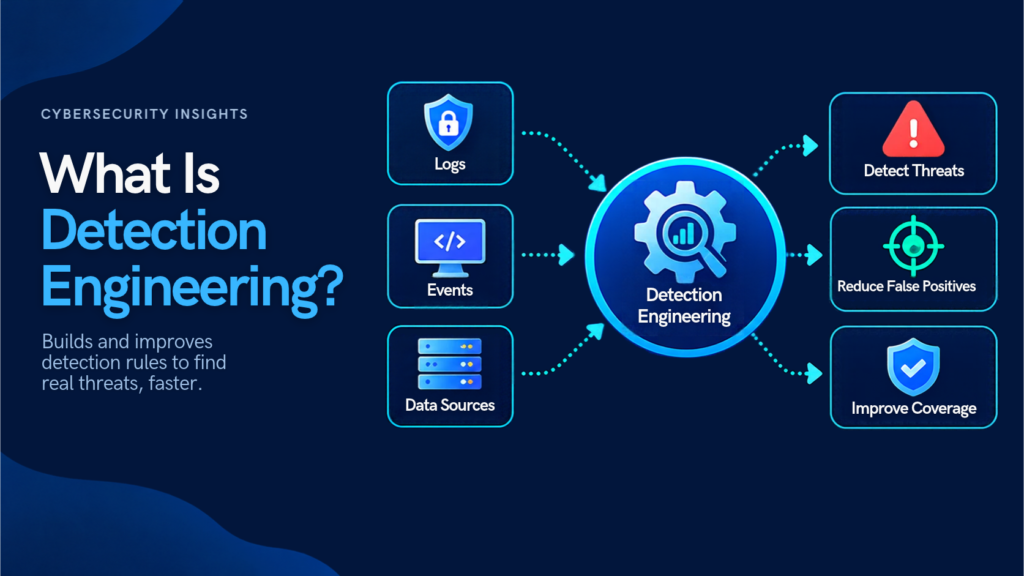
Security tools generate alerts. Those alerts are only as good as the detection logic running underneath them. Every correlation rule in a SIEM, every behavioral signature in an EDR, every analytic in an XDR platform was built by someone who wrote, tested, tuned, and maintained it against real attack techniques. The discipline of building and maintaining that detection logic is called detection engineering.
Detection engineering treats detection rules the same way software development treats production code: with version control, peer review, testing frameworks, and continuous improvement cycles. A detection rule that was accurate when it was written drifts toward uselessness as the environment changes, as attackers evolve their techniques, and as the systems generating the underlying log data shift. Without active maintenance, detection coverage degrades silently while the security team assumes the platform is still doing its job.
This post covers what detection engineering involves, how the process works, what separates effective detection logic from noise-generating rules, how detection engineering sits across SIEM, EDR, and XDR platforms, and what it takes to build a functioning detection engineering capability inside a security program.
Key Takeaways
- Detection engineering is the discipline of building, testing, validating, and maintaining the detection logic that security platforms use to identify threat activity.
- Detection rules degrade over time as environments change and attackers adapt; detection engineering is a continuous practice, not a one-time configuration.
- Effective detection is grounded in adversary behavior research and threat intelligence, not vendor defaults or log patterns alone.
- Detection quality has a ceiling set by log coverage; gaps in what is being logged directly produce gaps in what can be detected, regardless of rule quality.
- Penetration testing and detection engineering reinforce each other: test findings reveal the coverage gaps that new detection rules should close.
What Does Detection Engineering Actually Involve?
Detection engineering is the practice of researching adversary techniques, translating that research into detection logic, implementing those detections across security platforms, and maintaining them as the environment and threat landscape change. It sits at the intersection of threat intelligence, security operations, and software engineering, drawing methods from each.
The practice spans three overlapping activities that run in parallel across any active detection program.
Research and threat modeling. Detection engineers begin from adversary behavior: which techniques are relevant to the environment, what artifacts those techniques leave in logs and telemetry, and how attackers adapt those techniques to evade existing detection logic. The MITRE ATT&CK framework is a common reference point, providing a structured inventory of attack tactics and techniques that detection logic can be mapped against to surface coverage gaps. Where ATT&CK provides technique breadth, offensive security findings provide environment specificity.
Detection logic development. Researched techniques are translated into detection rules: correlation logic in SIEM, behavioral signatures in EDR, analytics in XDR, and trigger conditions in SOAR. Detection logic is typically written in a query language, a domain-specific rule format like Sigma, or a scripting language. Like production code, detection logic benefits from peer review, version control, and formal testing before deployment. In Bugstrix’s security work, applying structured code review to detection rule logic before deployment consistently surfaces condition errors, overly broad scope definitions, and false positive sources that would otherwise reach the production alert queue.
Validation and maintenance. Once deployed, detection rules must be tested against real or simulated attack data to confirm they fire correctly and do not fire on benign activity. As the environment changes and new techniques emerge, existing rules must be updated or retired to keep the detection library accurate. This maintenance cycle is not optional; it is what separates a functioning detection program from a collection of stale rules generating noise or false confidence.
How Does the Detection Engineering Process Work?
Detection engineering follows a structured lifecycle that repeats as threats evolve and environments change. Each stage produces inputs to the next, and the cycle continues as long as the detection program is active: research informs design, design produces implementation, implementation is tested and validated, and production performance drives the next iteration of research.
| Stage | Input | Output |
| Research | Threat intelligence, ATT&CK mapping, pen test findings | Prioritized technique list |
| Rule Design | Technique description, log schema, data availability | Detection rule specification |
| Implementation | Rule specification, platform query language | Live rule in SIEM, EDR, or XDR |
| Testing | Simulated attack data, benign baseline | True positive / false positive baseline |
| Validation | Test results, analyst feedback | Tuned, production-ready detection |
| Monitoring | Production alert data | Quality metrics, drift indicators |
| Maintenance | Environment changes, new techniques | Updated or retired rule set |
Research. The research stage determines which techniques to prioritize based on relevance to the specific environment, existing coverage gaps, and threat intelligence on active adversary activity. Penetration test findings are among the most direct inputs at this stage: a test that demonstrates successful post-exploitation through a gap in the detection stack provides a specific technique and log context to build coverage against.
Rule design. A well-designed rule specifies the triggering event pattern, required log sources, expected false positive rate, and the analyst response it should prompt. Rules that lack a clear specification before implementation are the primary source of alert fatigue and coverage gaps in production detection libraries. Treating detection rule development with the same peer review discipline as production code catches logic errors, ambiguous condition scope, and data type mismatches before a rule goes live.
Testing. Detection rules should be validated against attack simulation data, not discovered in production. A rule with an unknown true positive rate provides no reliable security coverage. Testing frameworks, purple team exercises, and atomic test cases give detection engineers confirmation that the rule fires correctly before deployment.
What Makes a Good Detection Rule?
Detection rules fail in two directions: they fire on too much benign activity and create noise that overwhelms analysts, or they miss real attacks because the logic is too narrow for the actual technique. Good detection engineering addresses both failure modes through precision design, technique grounding, and systematic testing before and after deployment.
Specificity over breadth. A rule that fires on any anomalous process execution will overwhelm analysts with false positives. A rule that fires when a web server process spawns a command interpreter with specific argument patterns associated with known exploitation chains gives analysts actionable context. Precision improves the signal-to-noise ratio of the alert queue. Bugstrix’s detection validation work regularly finds that deployed detection libraries have solid coverage against generic anomalies but significant gaps against the specific living-off-the-land techniques that modern attackers favor precisely because they blend into normal traffic.
Grounded in adversary behavior. Detections built from known attack technique patterns have clear coverage rationale and can be updated as those techniques evolve. Detections built from log anomaly patterns without an associated technique are difficult to maintain and provide uncertain coverage. Vulnerability management data improves rule prioritization: unpatched exposure in high-value systems should have detection coverage before remediation closes the risk window. Findings from a cybersecurity code review directly inform detection design: a vulnerability identified in an application’s authentication flow tells detection engineers the exact request patterns that indicate active exploitation of that weakness.
Testable against known attack data. A rule that cannot be validated against simulated attack data before deployment has unknown coverage. Detection engineers build test cases alongside rules: the specific event sequence that should trigger the rule, and the benign patterns that should not. Without test coverage, false positive rates are discovered in production at the cost of analyst time and alert credibility.
Maintained to coverage targets. A rule that was accurate at deployment drifts as the environment changes. Detection rules should map to specific techniques, and the detection library should be evaluated against the full technique inventory on a regular cycle. Rules that no longer match the environment’s log schema or that have been overtaken by attacker evolution should be retired rather than left in place as false confidence.
How Does Detection Engineering Relate to SIEM, EDR, and XDR?
Detection engineering is not bound to a specific platform. The same discipline of researching adversary techniques, writing detection logic, and maintaining it over time applies across every detection layer in the stack. What changes between platforms is the data type they work with, the detection mechanism they use, and the language detection engineers write rules in.
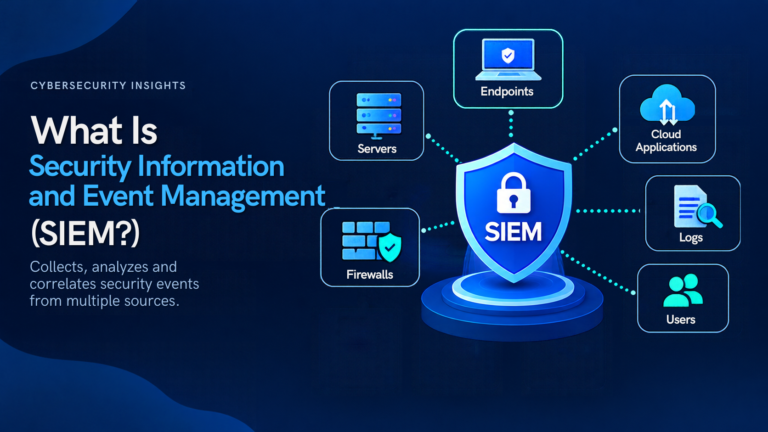
SIEM is the most common home for detection engineering work. Correlation rules written against normalized log data cover broad environment visibility, compliance-driven detection requirements, and multi-source event sequences that single-platform tools cannot reconstruct. Detection engineers write threshold rules, multi-source correlation logic, and threat intelligence indicator matching that runs continuously against the SIEM’s event stream.
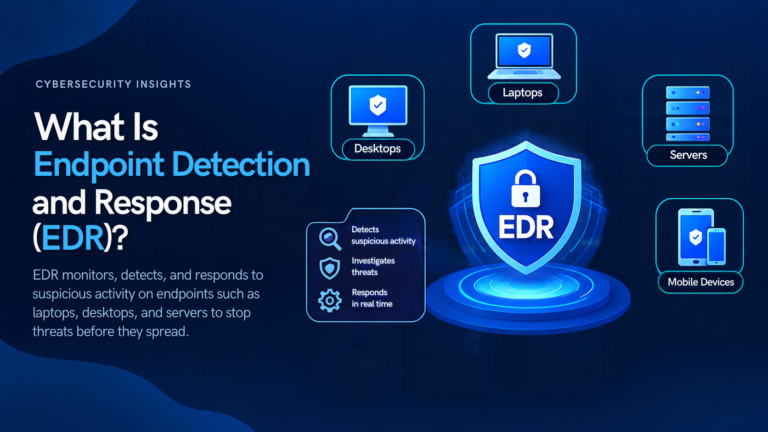
EDR platforms expose behavioral telemetry that log-based SIEM detection cannot capture: process execution chains, parent-child process relationships, network connections from specific processes, and registry modifications associated with persistence techniques. Detection engineers write custom behavioral detections on EDR platforms to cover technique-specific attack patterns that generic vendor signatures miss for the specific environment.
XDR correlates telemetry across endpoints, network, and cloud simultaneously, applying machine learning alongside rule-based detection. Detection engineering on XDR platforms involves tuning behavioral models and writing cross-domain correlation rules that span multiple telemetry sources in ways that single-domain platforms cannot.
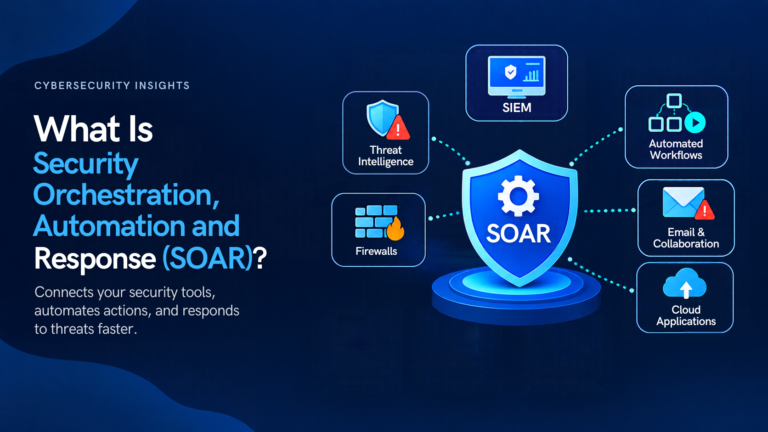
SOAR detection engineering is different in kind: instead of writing detection logic, detection engineers define the trigger conditions, alert prioritization thresholds, and enrichment query logic that SOAR playbooks use to triage and route what the detection platforms surface. A SOAR that receives well-defined triggers from a tuned detection stack can dramatically reduce analyst workload; one fed noisy, poorly scoped alerts amplifies the problem.
How Does Threat Intelligence Feed Detection Engineering?
Detection rules that are not grounded in adversary behavior cover log patterns rather than attack techniques. Threat intelligence is what tells detection engineers which techniques are relevant to the environment, how adversaries are adapting their methods, and what infrastructure indicators are currently active, turning detection engineering from a generic log monitoring exercise into a threat-informed discipline.
Technique-based intelligence. Tactical intelligence on how specific adversary groups operate gives detection engineers a threat model grounded in real attack behavior. A detection library built against documented adversary techniques has clear coverage rationale and can be updated as those techniques evolve. Technique intelligence is durable; infrastructure indicators expire as adversaries rotate their tooling and hosting.
Indicator-based intelligence. Threat intelligence feeds provide indicators of compromise: IP addresses, domains, file hashes, and certificate patterns associated with known threat infrastructure. These are directly consumable by SIEM and XDR detection rules as matching conditions. Indicator-based detection is effective against known infrastructure but has a short shelf life. Detection engineers treat indicators as a supplement to technique-based rules, not a substitute for them.
Adversary-derived rules. The most durable detection logic is derived from technique analysis rather than specific indicators. If an adversary technique consistently produces a specific sequence of log events, a rule that matches that sequence works regardless of which adversary or infrastructure is involved. Detection engineers working from cyber threat intelligence reports translate technique descriptions into the log-level event patterns that detection platforms can match, producing rules with longer useful lifespans than indicator-based matching.
Offensive security findings as detection inputs. Penetration test findings surface the specific techniques that succeeded against the environment, the log gaps they exploited, and the exact event patterns that a detection rule should match. Post-engagement rule development that closes gaps identified during testing creates a tighter feedback loop between offensive findings and defensive coverage than broad threat intelligence research alone provides.
What Are the Challenges of Detection Engineering?
Detection engineering produces real value only when the rules it produces are accurate, maintained, and tested. The challenges that undermine detection quality are consistent across organizations: poorly tuned rules generate noise, environment drift makes accurate rules inaccurate, and log gaps create coverage blind spots that no rule can compensate for.
Alert fatigue is an output quality problem. Poorly tuned detection rules produce large volumes of low-confidence alerts. When analysts spend most of their time triaging alerts that turn out to be benign, they miss the alerts that matter. Detection engineering addresses this at the rule level by requiring precision specifications before deployment and tracking false positive rates in production. Bugstrix penetration testing services regularly reveal that the attacks most likely to succeed against an environment are precisely the techniques generating the fewest alerts in the existing detection stack, because they were never tuned for.
Detection logic drifts. Rules written for one environment configuration become inaccurate as systems are added, retired, or reconfigured. A detection rule tuned against Windows process behavior may produce false positives or miss attacks entirely after a system upgrade changes the baseline it was calibrated against. Maintaining detection libraries at scale requires systematic review cycles and change integration processes that treat rule drift as a risk to manage, not a background degradation to accept.
Log coverage limits detection coverage. Detection engineering cannot compensate for log gaps. Techniques that execute in environments where logging is incomplete or absent are invisible regardless of how well the detection rules are written. Mapping detection coverage against log source coverage is a prerequisite for accurate detection gap analysis; rules built against data that is not being collected produce no signal.
Testing without production risk. Validating that a detection rule works correctly requires reproducing the attack technique it is designed to catch. In production environments, this means controlled testing through purple team exercises or attack simulation frameworks. Without that validation, detection rules are deployed with unknown true positive rates and their performance characteristics are discovered through real incidents rather than planned testing.
Does Your Organization Need a Detection Engineering Practice?
Most organizations have detection tools. Fewer have an active practice of writing, testing, and maintaining the logic those tools depend on. The gap between having a SIEM, an EDR, or an XDR deployment and operating a detection engineering function is where detection coverage degrades silently without surfacing in dashboards or metrics.
Organizations that are well-positioned to build a detection engineering function include those with a security operations team that currently manages alert queues and has the capacity to extend into rule development, those already running a SIEM or EDR with vendor-default rules that have not been tuned to the specific environment, and those that have completed a penetration test and have a prioritized list of gaps to close with new detection coverage.
Organizations where detection engineering capability should be preceded by foundational work include those where log coverage is incomplete, because detection rules built against gaps produce no signal. A prioritized log coverage audit that maps which systems are generating useful data is the prerequisite for detection engineering investment. Bugstrix assessments help identify where the coverage gaps are: which systems lack adequate logging, which techniques execute outside the current log collection scope, and which detection rules have drifted from their intended coverage.
For organizations without dedicated security engineering capacity, managed detection and response (MDR) providers apply detection engineering as part of the managed service, maintaining and tuning detection logic on behalf of clients with the analyst expertise and threat intelligence access that in-house teams often lack the bandwidth to sustain independently.
Frequently Asked Questions
What is detection engineering?
Detection engineering is the discipline of building, testing, and maintaining the detection logic that security platforms use to identify threat activity. It treats detection rules as code: with version control, peer review, testing frameworks, and maintenance cycles. Detection engineers research adversary techniques, translate that research into detection rules, validate those rules against attack data, and maintain them as the environment and threat landscape evolve.
What is a detection rule?
A detection rule is a specification of the event pattern, log source conditions, or behavioral sequence that triggers a detection alert in a security platform. Rules are implemented in platforms including SIEM correlation engines, EDR behavioral analytics layers, and XDR cross-domain analytics. A well-designed detection rule specifies its triggering condition precisely, has a known false positive rate, and maps to a specific adversary technique it is designed to catch.
How does detection engineering differ from threat hunting?
Threat hunting is an ad-hoc, hypothesis-driven investigation: an analyst manually searches through historical data or live telemetry looking for signs of compromise that automated detection may have missed. Detection engineering is the practice of taking what threat hunting and intelligence research surface and converting it into durable, automated detection rules. Threat hunting produces findings; detection engineering converts those findings into persistent coverage. The two practices reinforce each other.
What is Sigma in detection engineering?
Sigma is an open, vendor-agnostic detection rule format that allows detection engineers to write rules in a standardized language and convert them to the query format of specific SIEM and EDR platforms. A Sigma rule written against a Windows event pattern can be compiled for SIEM queries, EDR detections, or other log analysis tools without being rewritten from scratch. It is one of the most widely adopted rule formats in detection engineering programs that operate across multiple platforms.
How often should detection rules be reviewed?
Production detection rules should be reviewed continuously: false positive rates and alert volume are monitored in real time, and rules generating noise should be tuned immediately. A full detection library coverage review should run on a regular cycle, typically quarterly, to compare existing rule coverage against current ATT&CK technique mappings and identify gaps introduced by environment changes. Rules should also be reviewed whenever a major infrastructure change, new system deployment, or significant threat intelligence update occurs.
Does detection engineering replace penetration testing?
No. Detection engineering builds rules to catch attacks after they begin. Penetration testing identifies the vulnerabilities, misconfigurations, and attack paths that exist before an attacker reaches the environment. Bugstrix penetration testing services surface the specific technique gaps that detection rules should close, making test findings one of the most direct inputs to a detection engineering research backlog. The two practices are most valuable when they run in a continuous loop: tests identify gaps, detection engineering closes them, and subsequent tests validate the improvement.
Detection Engineering and the Security Program Around It
Detection engineering is the practice that determines whether security tools actually do what they are supposed to do. Every SIEM deployment, every EDR platform, every XDR analytics layer runs on detection logic that was written, tuned, and maintained by someone, or it runs on vendor defaults that were calibrated for a different environment and a different threat landscape. The gap between having detection tools and having effective detection coverage is filled by the engineering practice that builds and maintains the logic those tools depend on.
What detection engineering cannot do is eliminate the need for proactive security validation. Rules that have never been tested against real attack techniques provide unknown coverage. Environments where log collection is incomplete produce detection blind spots that no rule can compensate for. Attack paths that exist because of unpatched vulnerabilities or misconfigured systems remain available regardless of how well the detection stack is tuned. Bugstrix works with organizations across the full detection engineering lifecycle: from validating existing detection coverage through penetration testing and coverage gap analysis, to developing and testing detection rules against the specific techniques most relevant to the environment, to building the maintenance processes that keep detection quality accurate as both the environment and the threat landscape continue to change.
Contact us to discuss your detection coverage and security program