What Is Compliance Penetration Testing and How Does It Work?

Written By
Sarwat Iftikhar

Most businesses first encounter penetration testing as a compliance requirement, not a proactive security decision. A QSA asks for it during a PCI DSS assessment. An auditor flags its absence during a SOC 2 review. An enterprise prospect includes it in their vendor security questionnaire. The pressure is real, the deadline is often tight, and the question of exactly what the framework actually requires, as opposed to what vendors claim it requires, is rarely as clear as it should be.
Compliance penetration testing is not a single, standardised activity. It is a category of security testing shaped by the specific requirements of the compliance framework in scope, the evidence standards that auditors will apply, and the scope boundaries that define which systems need to be tested. A test that satisfies a SOC 2 auditor will not necessarily satisfy a PCI QSA, and a test that satisfies a PCI QSA may not satisfy a DORA-appointed assessor. Understanding what each framework actually demands is the prerequisite to commissioning a test that produces useful evidence rather than a report that needs to be redone.
This post explains what compliance penetration testing is, which frameworks require it, how the process differs from standard penetration testing, and what your business needs to know to get it right the first time.
Key Takeaways
- Compliance penetration testing is shaped by the specific evidence standards, scope requirements, and methodology expectations of the in-scope compliance framework, not just general penetration testing best practices.
- PCI DSS v4.0, SOC 2, ISO 27001, HIPAA, and DORA all require penetration testing in practice, but with meaningfully different scope, cadence, and documentation requirements.
- The most common reason a compliance penetration test fails to satisfy an auditor is incomplete methodology documentation, not missing technical findings.
- Compliance tests require a different report structure than security-only tests: findings must be mapped to specific framework criteria, evidence must meet auditor standards, and retest documentation is required to close findings rather than just list them.
- In Bugstrix compliance engagements, businesses that scope the test against audit requirements upfront consistently pass their first audit cycle. Those who commission a generic test and try to map it to compliance requirements afterwards almost always need supplemental evidence.
What Is Compliance Penetration Testing?
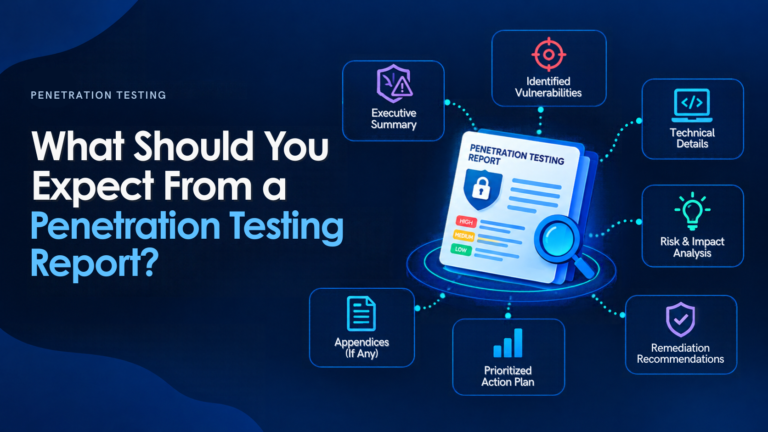
Compliance penetration testing is a structured security assessment conducted to satisfy the specific penetration testing requirements of a regulatory or industry compliance framework, producing evidence that auditors, assessors, and enterprise buyers will accept as proof that security controls are functioning effectively. It differs from standard penetration testing in scope definition, methodology documentation, reporting format, and the evidence standards the output must meet.
A standard penetration test is scoped around what matters most from a security perspective: the highest-risk attack surface, the most critical systems, the most likely attacker entry points. A compliance penetration test must be scoped around what the framework requires: specific system boundaries defined by the compliance program, specific testing layers mandated by the standard, and specific evidence types that auditors are trained to look for.
In practice, compliance penetration testing often covers the same technical ground as a well-scoped security test. The difference lies in how the engagement is designed, how findings are documented against framework criteria, and what happens after the test in terms of remediation evidence and retest documentation. These structural differences are what make a compliance test acceptable to an auditor when a generic security test might not be.
For a broader foundation on what penetration testing covers as a discipline, our complete guide to what penetration testing is covers the full methodology from scoping through deliverables, providing useful context before diving into the compliance-specific layer.
Why Do Compliance Frameworks Require Penetration Testing?
Compliance frameworks require penetration testing because documented policies and implemented controls are not the same as effective controls. A firewall rule may be correctly documented and technically in place but configured to allow traffic it should block. An access control policy may state that only authorised roles can reach a specific function, but the implementation may include a bypass the policy author did not anticipate. Penetration testing confirms controls work under realistic adversarial conditions, not just design assumptions.
This is the gap that auditors are trained to evaluate. Written policies and self-assessments can confirm that an organisation believes its controls are working. Only adversarial testing can confirm that they actually are. The compliance requirement for penetration testing exists precisely to prevent organisations from achieving certification based on documented intent rather than demonstrated reality.
The secondary reason frameworks require penetration testing is that it produces time-stamped, third-party evidence of security posture that auditors can review, question, and evaluate rather than take on faith. An auditor reviewing a penetration test report can assess whether the scope was appropriate, whether the methodology was rigorous, and whether findings were properly remediated. An auditor reviewing a security policy document can only confirm that the policy exists. The two differ fundamentally in evidential value.
Which Compliance Frameworks Actually Require Penetration Testing?
The major compliance frameworks that require penetration testing in practice are PCI DSS, SOC 2, ISO 27001, HIPAA, and DORA. None of them requires the same thing. Each specifies different scope, cadence, methodology standards, and evidence requirements. Understanding which framework applies to your business, and what that framework specifically demands, is the first step in commissioning a test that will actually satisfy your audit.
PCI DSS v4.0 is the most prescriptive penetration testing framework. Requirement 11.4 mandates annual internal and external testing, mandatory application-layer testing covering Requirement 6 threat categories, documented methodology referencing an industry-accepted standard, segmentation validation, and retest evidence confirming that findings were remediated. Repeat testing after any significant change to the Cardholder Data Environment.
SOC 2 does not explicitly name penetration testing, but auditors expect it under CC4.1, which requires ongoing evaluation that controls are present and functioning. The test must fall within the audit observation period for Type II, and findings must map to the relevant Trust Services Criteria rather than being listed only as technical vulnerabilities. Our post on SOC 2 penetration testing and why it matters covers this in full detail.
ISO 27001 requires technical vulnerability management under Annex A.8.8 and security testing under A.8.29. The test evidence needs to be integrated into the ISMS documentation and mapped to the Annex A controls it validates. Unlike SOC 2, which uses a defined observation period, ISO 27001 evaluates the ISMS on a three-year certification cycle with annual surveillance audits.
HIPAA does not use the word penetration testing, but its risk analysis requirement under the Security Rule effectively mandates it for organisations handling Protected Health Information across complex environments. Healthcare organisations are expected to assess and document the exploitability of vulnerabilities across all PHI-handling systems, which in practice requires testing beyond automated scanning.
DORA in force for EU financial entities since January 2025, mandates an annual security testing program covering all critical ICT systems and Threat-Led Penetration Testing every three years for entities performing critical functions. TLPT is the most rigorous form of compliance penetration testing currently in existence and requires coordination among the tested entity, the testing firm, and the relevant financial supervisory authority.
How Does Compliance Penetration Testing Differ from Standard Penetration Testing?
Compliance penetration testing differs from standard penetration testing in four specific ways: scope is defined by framework requirements rather than risk assessment alone, methodology must reference an accepted standard explicitly, findings must be mapped to specific framework criteria rather than just described technically, and the report must include evidence structures that auditors are trained to evaluate rather than security teams alone.
These differences are not cosmetic. They directly affect what the test covers, how the findings are documented, and whether the report satisfies the compliance obligation it was commissioned to meet.
Scope definition. A standard penetration test focuses on the highest-risk components and most likely attack paths. A compliance test must cover whatever the framework defines as in-scope, whether or not those components represent the greatest security risk. A PCI test must cover the entire Cardholder Data Environment boundary, including legacy systems that a risk-based assessment would not necessarily prioritise. A SOC 2 test must cover everything within the system boundary defined for the audit.
Methodology documentation. PCI DSS v4.0 explicitly requires a documented methodology referencing a named industry standard such as NIST SP 800-115, PTES, or OWASP. Other frameworks do not always name a methodology explicitly, but auditors expect it to be documented. A compliance test report that cannot describe the methodology used in a way an auditor can evaluate does not fully satisfy the requirement, regardless of how technically thorough the testing was.
Findings documentation. A standard penetration test report describes technical findings with severity ratings and remediation recommendations. A compliance test report must map each finding to the specific framework control it violates, provide business impact context in the language the auditor uses, and, in some cases, provide enough detail for the auditor to assess whether the control would have prevented the finding.
Remediation evidence. In compliance testing, finding a vulnerability is only part of the requirement. Most frameworks require documented evidence that the finding was remediated and that a retest confirmed the remediation. Without this, the compliance requirement is not fully satisfied even if the technical testing was excellent.
How Does the Compliance Penetration Testing Process Work?
The compliance penetration testing process works across five stages: scope alignment against framework requirements, active testing using a documented methodology, findings documentation with framework criteria mapping, remediation support, and retest evidence collection. Getting the first stage right, specifically aligning scope and evidence requirements against what the auditor will actually look for, is what determines whether the later stages produce useful output or require rework.
Stage 1: Scope alignment. The engagement begins by mapping the system boundary defined for the compliance audit to the penetration test’s technical scope. This requires understanding which systems, applications, network segments, and integrations are within the compliance boundary and confirming that the test will cover all of them. At Bugstrix, we have this conversation at the start of every compliance engagement because scope gaps discovered after testing are far more disruptive than gaps caught during planning.
Stage 2: Methodology selection and documentation. We select the testing methodology based on the framework requirements and document it before testing begins. For PCI DSS engagements, this means explicitly referencing a named standard. For SOC 2 and ISO 27001 engagements, this means producing methodology documentation detailed enough that the auditor can assess what was covered. The methodology document becomes part of the compliance evidence package.
Stage 3: Active testing. Testing is conducted according to the documented methodology, covering all in-scope systems and the specific testing layers required by the framework. For most compliance frameworks, this means both network-layer and application-layer testing. PCI DSS adds segmentation validation. DORA adds social engineering assessments. The testing phase produces raw findings that move into documentation.
Stage 4: Compliance-mapped reporting. Findings are documented with technical detail, severity ratings, exploitation evidence, business impact context, and framework criteria mapping. Every critical and high-severity finding is linked to the specific framework control it relates to. The report structure supports the auditor’s review process, not just the security team’s remediation work.
Stage 5: Remediation and retest. Critical and high-severity findings are remediated by the client’s technical team, and a retest is conducted to confirm the remediation was successful. The retest results are documented in a format that satisfies the framework’s evidence requirements, typically as a formal addendum to the original report. This documentation is what closes the compliance loop and allows the auditor to confirm that identified risks were addressed.
Our penetration testing services follow this five-stage process for every compliance engagement, with the report structure and evidence package tailored to each client’s specific framework requirements.
What Types of Penetration Testing Does Each Framework Actually Require?
Each compliance framework requires different types of penetration testing based on the specific attack surface its security controls are designed to protect. Understanding which types are required for your framework prevents both gaps in coverage, where the test misses what the auditor will look for, and scope inflation, where the test covers far more than the framework requires at unnecessary cost.
Web application penetration testing is required under PCI DSS for any web application that is part of the Cardholder Data Environment or connected to it. SOC 2 expects it for any platform whose system boundary includes web application components, which describes most SaaS companies. It maps to ISO 27001 Annex A.8.29 for any organization that develops or maintains web applications as part of its ISMS scope. Our web application penetration testing services are structured to produce the application-layer evidence these frameworks specifically require.
Mobile application penetration testing applies when a mobile application handles regulated data or falls within the defined compliance boundary. For PCI DSS, any mobile application that processes, stores, or transmits cardholder data is in scope. For HIPAA, mobile applications that handle PHI fall within the risk assessment requirement. For SOC 2, mobile applications within the defined system boundary need to be covered. Our mobile app penetration testing services cover the iOS and Android attack surface that increasingly falls within compliance scope as mobile-first products handle regulated data.
Network penetration testing is required under virtually every framework that mandates testing. PCI DSS requires both internal and external network testing of the CDE. SOC 2 expects it as part of the broader evaluation of whether access controls and monitoring capabilities actually work. ISO 27001 requires it as part of technical vulnerability management. The specific scope, from full infrastructure to a defined network segment, varies by framework and organisation.
Social engineering and phishing assessments are specifically required under DORA as part of the annual security testing program for financial entities. They are not explicitly required under PCI DSS, SOC 2, or ISO 27001, but mature compliance programs increasingly expect them, as social engineering remains one of the most consistent initial access vectors.
How Much Does Compliance Penetration Testing Cost?
Compliance penetration testing costs more than a standard penetration test of equivalent scope because it requires additional methodology documentation, criteria mapping, and retest evidence to satisfy auditor expectations. The premium over a standard test varies by framework but typically runs fifteen to thirty percent above the baseline testing cost.
For typical mid-market organisations, compliance penetration testing costs by framework run approximately as follows: PCI DSS assessments covering both network and application layer run $12,000 to $30,000 depending on CDE complexity and whether segmentation validation is required. SOC 2 engagements covering web application and network testing run $10,000 to $25,000. ISO 27001 assessments run $8,000 to $20,000. HIPAA assessments vary widely based on the scope of PHI-handling systems, running $10,000 to $50,000. DORA TLPT engagements are the most expensive compliance testing category, running significantly higher due to their scope and coordination requirements.
The cost difference between compliance and standard testing isn’t just the premium. It is also about the cost avoidance on the other side. A compliance penetration test that passes auditor review on first submission avoids the cost of a supplemental engagement, delays to the compliance calendar, and the potential impact on an enterprise deal or regulatory relationship waiting on the certification.
For a full breakdown of what drives penetration testing costs across all scope types, our post on penetration test costs in 2026 covers the full pricing landscape with the specific factors that move costs up or down for different engagement types.
For small and mid-market businesses evaluating how compliance penetration testing fits within an overall security budget, our post on how much a small business should spend on cybersecurity provides a practical framework for allocating security investment alongside compliance requirements.
How Do You Choose the Right Compliance Penetration Testing Provider?
Choosing the right compliance penetration testing provider requires confirming two things that most buyers underweight relative to price: that the provider has genuine experience with the specific framework in scope, and that their report format and evidence structure will satisfy the auditor, not just the security team. Both are essential, and neither is obvious from a vendor’s general marketing materials.
Framework-specific experience matters because compliance testing is not just technically rigorous testing with a compliance label attached. Producing a PCI DSS-compliant report requires understanding how QSAs evaluate methodology documentation, how segmentation validation evidence is structured, and what the retest addendum needs to contain. Producing a SOC 2-compliant report requires understanding how TSC criteria are mapped to findings and how the report fits into the broader audit evidence package. A provider who has only done general security testing may produce excellent technical findings but a report that requires significant rework before an auditor will accept it.
The questions to ask before signing a compliance penetration testing engagement:
Have they produced reports that were accepted by auditors for this specific framework? Not “do they do compliance testing” but “have their reports been accepted by QSAs” or “have their reports satisfied SOC 2 auditors” as named examples. Specific affirmative answers to specific questions distinguish genuine framework experience from general claims.
Does the report template include all required elements for the framework? Ask to see an example report structure before engagement. A provider confident in their compliance experience will have a defined template. A provider who will “figure out the format during the engagement” is not the right choice for a compliance-driven test.
Is retest included in the engagement cost? Retest is required for compliance evidence in most frameworks. A provider that charges separately for it, or doesn’t offer it as part of the compliance engagement, hasn’t built its service around the compliance requirement.
For a complete framework for evaluating penetration testing providers across all engagement types, our post on how to choose a penetration testing company in 2026 covers the specific evaluation criteria that matter most before committing to any engagement.
Frequently Asked Questions
Is compliance penetration testing the same as a regular penetration test?
Not exactly. The technical testing methodology overlaps significantly, but compliance penetration testing adds specific requirements around scope definition, methodology documentation, findings mapping to framework criteria, and retest evidence that standard security tests do not always include. A test designed for a security audience will not necessarily satisfy a compliance auditor, and a test designed specifically to satisfy a compliance auditor may be scoped differently than a purely risk-driven assessment.
Can one penetration test satisfy multiple compliance frameworks?
Yes, if designed correctly upfront. A test scoped to cover both the SOC 2 system boundary and the ISO 27001 ISMS boundary, with findings mapped to both frameworks’ criteria in the report, satisfies both audits in a single engagement. This requires explicit coordination at the scoping stage rather than attempting to map a single-framework report to additional frameworks after the fact. PCI DSS can also be combined with SOC 2 or ISO 27001 where the system boundaries overlap, though PCI’s specific segmentation and methodology documentation requirements need to be explicitly addressed.
How long before an audit should compliance penetration testing be completed?
At least six to eight weeks before the audit date. This allows time for testing, remediation of critical and high-severity findings, retest confirmation, and compilation of the complete evidence package before the auditor’s review begins. For SOC 2 Type II specifically, the test must fall within the observation period, and the retest documentation must be complete before the observation window closes, which makes early scheduling even more important.
Does HIPAA require penetration testing specifically?
HIPAA does not use the words penetration testing in its Security Rule. It requires a thorough risk analysis of all vulnerabilities in systems handling electronic Protected Health Information, and identifying exploitable vulnerabilities across complex healthcare environments effectively requires testing that goes beyond automated scanning. Most healthcare organisations with complex IT environments conduct penetration testing as part of their HIPAA risk analysis, and regulators and auditors treat it as the expected standard for demonstrating a thorough assessment.
What happens if a compliance penetration test finds critical vulnerabilities?
Critical vulnerabilities found during a compliance penetration test need to be remediated and confirmed through a documented retest before the compliance evidence package is complete. This does not automatically cause an audit failure. Auditors are evaluating whether your security program identifies and addresses vulnerabilities, not whether your environment is perfect. A test that finds critical issues, documents them, remediates them, and confirms remediation through a retest demonstrates exactly the control effectiveness the framework is evaluating.
Compliance Testing Is a Floor, Not a Ceiling
The most useful framing for compliance penetration testing is that it defines the minimum standard you need to meet, not the optimal security program you should build. A test designed exclusively to satisfy an auditor, scoped to the minimum required and documented to the minimum standard, passes the compliance requirement but may miss the issues that matter most from a genuine security perspective.
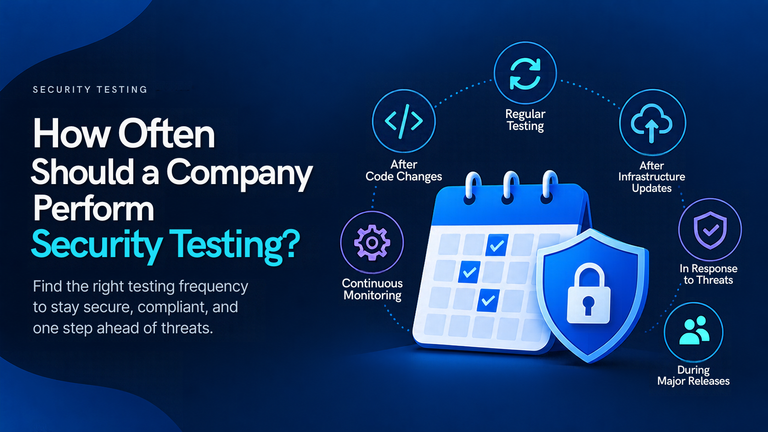
The organisations that get the most from compliance penetration testing treat the compliance requirement as a starting point rather than a finish line. They scope around what the framework requires and the highest-risk components in their environment. They use the findings to improve their security program rather than to produce a report and move on. And they build the remediation and retest cycle into their operational calendar rather than treating it as a last-minute exercise before each audit.
That approach produces compliance evidence that satisfies auditors and a security posture that reflects reality. Both outcomes matter, and a well-run compliance penetration testing program delivers both at once.
Contact us to discuss your compliance penetration testing requirements