What Is Social Engineering Testing and How Does It Work?

Written By
Sarwat Iftikhar
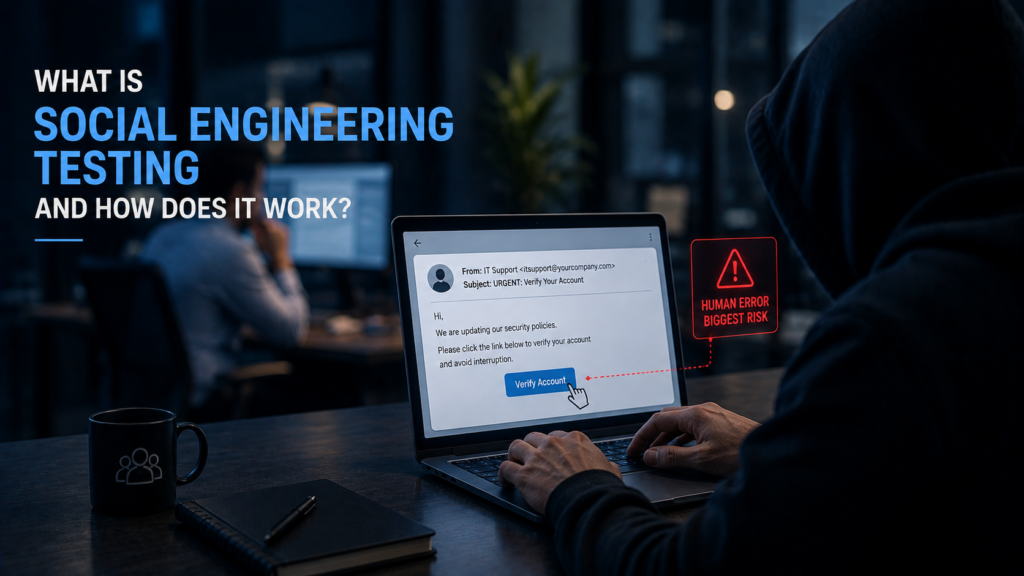
Technical security controls have never been stronger. Firewalls, endpoint detection, multi-factor authentication, and network monitoring have made purely technical attacks significantly harder than they were a decade ago. Attackers noticed, and they adapted. The path of least resistance into most organizations in 2026 is not through an unpatched server. It is through a person.
Over 80% of security breaches involve the human layer in some form, whether through phishing, pretexting, vishing, or manipulation of employees into taking actions that bypass technical controls entirely. An attacker who convinces an employee to reset their password through a fake IT portal, hand over credentials in response to an urgent executive request, or plug in a USB device found in the car park does not need to bypass a single firewall to get inside.
Social engineering testing examines whether your organization is vulnerable to these human-targeted attacks by conducting controlled, realistic simulations before a real attacker does. It is not a security awareness training program. It is an active test of whether the people, processes, and response capabilities that sit between an attacker and your sensitive systems would actually stop an attack, or let it through.
Key Takeaways
- Over 80% of security breaches involve the human layer. Social engineering testing is the only way to find out whether your employees would recognize and report an attack before it succeeds.
- Social engineering testing covers phishing, vishing, smishing, pretexting, and physical intrusion scenarios. Each tests a different aspect of human security posture.
- In Bugstrix social engineering engagements, the average click rate on targeted spear phishing campaigns against organizations without prior testing runs between 25% and 40%, and credential submission rates from those clicks run between 40% and 60% of clickers.
- Social engineering testing is not the same as security awareness training. Testing reveals the current vulnerability. Training addresses it. Both are necessary, and testing without training produces findings without improvement.
- The most successful social engineering attacks in 2026 use AI-generated personalized content that references real organizational context, making them significantly harder to detect than the generic phishing emails most awareness training was designed to flag.
What Is Social Engineering Testing?
Social engineering testing is a structured security assessment in which qualified security professionals simulate the human-targeted attack techniques used by real threat actors, including phishing, vishing, pretexting, and physical intrusion attempts, to evaluate whether an organization’s employees, processes, and reporting mechanisms would recognize and respond to those attacks appropriately.
Social engineering testing is fundamentally different from automated security scanning or even technical penetration testing in one critical respect: the vulnerability it tests is not in software or infrastructure. It is in human behavior under conditions of uncertainty, urgency, and trust. A tool can’t evaluate those conditions. They require a real simulation that puts real people in realistic scenarios and measures how they respond.
The output of a social engineering test is not a list of technical vulnerabilities with CVSS scores. It is behavioral data: which employees clicked, which submitted credentials, which reported the simulation, which took no action at all, and whether the security team’s detection and response capabilities identified the campaign or missed it entirely. That behavioral data, combined with analysis of which pretexts and scenarios were most effective, is what drives both the training response and the security program improvements that follow.
At Bugstrix, we conduct social engineering assessments as standalone engagements or as part of broader red team exercises, where the social engineering component provides initial access that the technical post-exploitation phase then builds on.
Why Is Social Engineering Testing Important for Businesses?
Social engineering testing matters because the human layer is simultaneously the most attacked and the least formally tested component of most security programs. Organizations spend significant budgets on technical security controls and test them regularly through penetration testing and vulnerability assessments. Most of those same organizations have never formally tested whether their employees would fall for a realistic phishing campaign, respond to a pretexting call from someone claiming to be IT, or report a suspicious USB device found in the office.
The consequence of that gap is that the human layer, which attackers consistently identify as the easiest entry point, is the layer organizations know the least about from a security perspective. Technical vulnerabilities are catalogued, prioritized, and tracked to remediation. Human vulnerabilities, which include employees who are susceptible to urgency-based phishing, departments with low reporting rates, and help desk processes that can be manipulated through social engineering, are rarely known at all until a real attack exposes them.
The risk has accelerated specifically in 2026 because AI has made social engineering attacks significantly more convincing. AI tools allow attackers to generate personalized phishing content at scale, referencing real organizational context gathered from public sources, writing in the target’s native language with perfect grammar, and customizing the pretext to the specific role and responsibilities of the individual being targeted. The volume of generic, easily detectable phishing has been replaced by a smaller volume of highly targeted, much harder to detect spear phishing, and most security awareness training programs have not kept pace with that shift.
What Are the Different Types of Social Engineering Attacks Tested?
Social engineering testing covers five primary attack categories: phishing, spear phishing, vishing, smishing, and physical social engineering. Each targets a different channel and tests a different aspect of the organization’s human security posture. A complete social engineering assessment typically includes more than one category because each reveals different vulnerabilities that the others do not.
Phishing is the most commonly tested attack type and the most common initial access vector in real-world breaches. Bulk phishing simulations send the same or similar email to a large portion of the employee population and measure click rates, credential submission rates, and reporting rates across the organization. Spear phishing simulations target specific individuals or departments with personalized content built from open-source intelligence gathering, producing a much more realistic test of how the organization would respond to a targeted campaign.
Vishing simulates a phone call from a manipulative caller impersonating IT support, an executive, a vendor, or a regulatory body. Vishing tests a different set of human behaviors than email phishing: the willingness to follow instructions from an authority figure under time pressure, the tendency to skip verification steps when a caller sounds confident and knowledgeable, and the processes that govern how IT resets credentials or provides access in response to a verbal request.
Smishing targets the SMS channel with messages designed to trigger urgency-based responses: a delivery notification requiring action, an urgent security alert from IT, or an executive’s request for an immediate callback. Smishing is increasingly relevant as more business communication and authentication move to mobile, and as attackers follow users to whichever channel has the weakest defenses.
Pretexting is scenario-based manipulation that typically targets internal processes rather than individual employees directly. Pretexting tests might attempt to manipulate the help desk into resetting an executive’s credentials by impersonating that executive, convince the finance team to process a payment by impersonating a vendor with an urgent invoice, or extract sensitive information by impersonating a new hire who needs access to complete their onboarding.
Physical social engineering tests whether personnel controls would prevent an unauthorized person from gaining physical access to facilities or sensitive areas. Tailgating tests assess whether employees hold doors for people who follow them through a secured entrance. Rogue device scenarios test whether employees would plug in a found USB device or report it. In-person impersonation tests simulate a visitor or contractor attempting to access restricted areas without proper authorization.
How Does Social Engineering Testing Work in Practice?
Social engineering testing follows a structured process from intelligence gathering through scenario execution, measurement, and reporting. The process is entirely manual and requires human judgment at every stage, from designing realistic scenarios to evaluating nuanced employee responses that data alone cannot fully capture.
Phase 1: Reconnaissance and intelligence gathering. Before launching any simulation, the testing team gathers publicly available intelligence about the organization, its employees, its technology, and its business context. This mirrors exactly what a real attacker would do before targeting the organization. LinkedIn profiles, company websites, press releases, job postings, and technical signals from public sources all contribute to building the pretexts that will be used in the simulation. This phase is what separates a realistic spear phishing campaign from a generic phishing template, and it is why targeted simulations produce more actionable results than bulk template campaigns.
Phase 2: Scenario design. The pretexts and scenarios used in the simulation are designed based on the intelligence gathered and the specific attack types the engagement is testing. Effective social engineering scenarios exploit the specific context of the target organization: the name of the real IT helpdesk team, the format of legitimate internal communications, the specific business applications employees use, and the operational pressures that might make an employee more likely to act without verifying. Generic scenarios produce lower engagement rates and less realistic data than tailored ones.
Phase 3: Campaign execution. The simulated attacks are executed according to the agreed scope and timeline. Phishing campaigns are launched, vishing calls are made, smishing messages are sent, and physical scenarios are enacted, all within the rules of engagement established at the start of the engagement. The testing team monitors results in real time and adapts scenarios if early results indicate that a specific approach is not producing useful data.
Phase 4: Measurement and analysis. Every employee interaction with the simulation is captured: who received the communication, who clicked, who submitted credentials or sensitive information, who reported the simulation through the correct channel, and who took no action at all. For phishing campaigns, the time between receipt and action is also captured, since rapid responses indicate urgency-driven decision-making rather than careful evaluation. This data is analyzed by department, role, and seniority to identify which segments of the organization are most vulnerable.
Phase 5: Reporting and recommendations. The final report documents the simulation methodology, the pretexts used, the quantitative results across all measured metrics, and qualitative analysis of which scenarios were most effective and why. Critically, the recommendations that follow are specific rather than generic. “Implement phishing awareness training” is not a useful recommendation. “Update training to cover AI-generated spear phishing with organizational context, focus initial effort on the finance and HR departments where click rates were highest, and review the IT helpdesk credential reset process which was successfully manipulated in two of three vishing scenarios” is.
What Is Phishing Simulation Testing?
Phishing simulation testing is the most widely used form of social engineering assessment, sending realistic but controlled phishing emails to employees to measure click rates, credential submission, and reporting behavior across the organization. It is not a security awareness training program, though it is often followed by one. It measures current vulnerability before training addresses it.
The metrics that matter in a phishing simulation are not just click rate. Raw click rate tells you what percentage of employees interacted with the phishing email, but it doesn’t tell you whether the organization is improving over time, which departments or roles are most vulnerable, or whether the reporting culture is healthy. A complete phishing simulation measurement framework tracks click rate and credential submission rate as the primary vulnerability indicators, but equally tracks the reporting rate, which measures how many employees who received the simulation recognized and reported it through the correct channel, and the time to report, which indicates whether the reporting process is fast enough to be useful in a real incident.
The goal of a phishing simulation program run on an ongoing basis is not a zero click rate. That is not achievable. The goal is a decreasing click rate over successive campaigns, an increasing reporting rate, and a shortening time to report, all of which indicate that the organization’s human security posture is improving in a measurable way.
How Is Social Engineering Testing Different from Penetration Testing?
Social engineering testing and penetration testing both involve qualified security professionals actively attempting to compromise the organization’s security, but they target fundamentally different components. Penetration testing targets technical systems, applications, and infrastructure. Social engineering testing targets people, processes, and behavior.
The distinction matters for three practical reasons. First, the skills required are different. A penetration tester needs deep technical expertise in exploitation, network protocols, and application security. A social engineering tester needs expertise in psychology, communication, scenario design, and the specific behaviors that make social attacks effective in different organizational and cultural contexts. These are different disciplines, and the best practitioners in each are not necessarily interchangeable.
Second, the findings have different remediation paths. Technical penetration test findings are fixed by patching software, reconfiguring systems, or changing code. Social engineering findings are addressed through training, process changes, and cultural shifts. The remediation timeline for human behavior is measured in months to years rather than days to weeks, which makes ongoing testing and measurement even more important than in technical testing programs.
Third, the compliance and business value of the evidence is different. Technical penetration test results satisfy PCI DSS, SOC 2, ISO 27001, and other framework requirements. Social engineering test results primarily satisfy the security awareness and training requirements within those same frameworks and provide the behavioral baseline that makes awareness program investment measurable.
For organizations that want to understand how social engineering testing fits within a broader security assessment program, our complete guide to what penetration testing is covers the full landscape of security testing disciplines and where each one belongs.
Our penetration testing services and security assessment services cover both the technical and human layers of organizational security, designed to work together in a complete program rather than in isolation.
How Does Social Engineering Testing Relate to Red Teaming?
Social engineering testing and red teaming are closely related but distinct in scope and purpose. In a standalone social engineering assessment, the test is focused exclusively on the human layer: measuring click rates, testing help desk processes, and evaluating physical security controls. In a red team engagement, social engineering is often the initial access technique that gives the red team the foothold they need to pursue the broader objective.
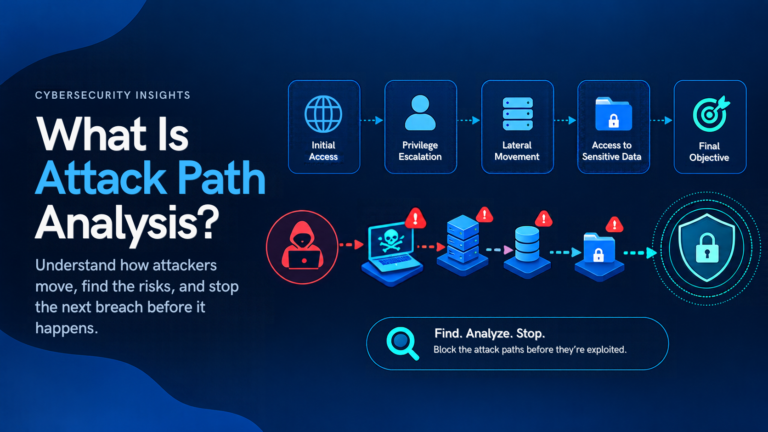
The relationship is that social engineering testing proves a specific hypothesis about human vulnerability, while red teaming uses that vulnerability as a starting point for a much larger exercise about whether an attacker who gained access through a successful social engineering attack could achieve a meaningful objective without being detected.
An organization that has never run social engineering testing and wants to understand whether they are vulnerable to human-targeted attacks should start with a standalone social engineering assessment. An organization that has already measured their social engineering vulnerability and wants to understand what a real attacker could do with that initial access should look at a red team engagement that uses social engineering as the initial access vector.
Our post on what red teaming is covers how red team engagements work and how social engineering fits within the broader adversary simulation framework.
How Does the Human Attack Surface Connect to Attack Surface Management?
The human attack surface is the collection of employees, processes, and organizational behaviors that an attacker could exploit as entry points into the organization’s environment. It expands every time an employee joins, a new department is created, a new vendor relationship is established, or the organization’s public profile changes in ways that create new pretexting opportunities for a potential attacker.
Most organizations have a clearer picture of their technical attack surface than their human one. They know what internet-facing systems exist. They know what software versions are deployed. They do not always know which employees have been publicly associated with sensitive projects through conference talks or LinkedIn posts, which departments have had recent turnover that created account management gaps, or which vendor relationships have created expectations that make impersonation-based pretexting more convincing.
Attack surface management, applied to the human layer, means continuously monitoring the publicly available information about an organization and its employees that could be used to build social engineering pretexts. The organizational intelligence that appears in public sources, job postings, social media, press coverage, and professional networks represents the raw material for a spear phishing campaign or a pretexting scenario, and understanding what that material contains is the first step toward managing the human attack surface the same way technical attack surface management manages exposed infrastructure.
Our attack surface management service provides the continuous discovery capability that keeps the full attack surface, technical and human, under ongoing visibility. Our post on what attack surface management is explains how that continuous discovery works and what it covers.
How Often Should Organizations Run Social Engineering Tests?
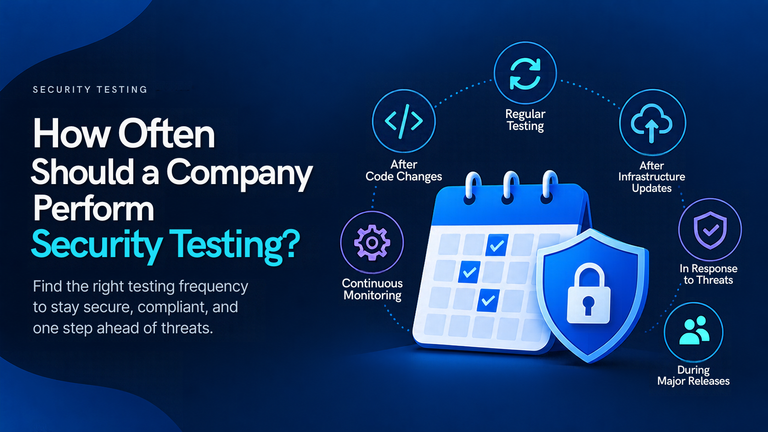
Organizations should run social engineering testing at minimum annually, with phishing simulations run more frequently on a quarterly basis and an increasing cadence for high-risk roles and departments. The right frequency depends on how fast the threat environment is changing and how quickly the organization wants to demonstrate measurable improvement in its human security posture.
Annual comprehensive social engineering assessments covering phishing, vishing, pretexting, and if relevant physical scenarios provide a complete picture of human vulnerability at a point in time. These are appropriate for organizations conducting their first assessment or those looking to satisfy compliance requirements around security awareness testing.
Quarterly phishing simulations provide the measurement cadence needed to track improvement over time and to maintain behavioral vigilance after initial awareness training. The evidence from training shows that human susceptibility to phishing decreases significantly in the weeks after a simulation and then gradually recovers if not reinforced. Regular simulation maintains a higher baseline awareness than annual-only testing.
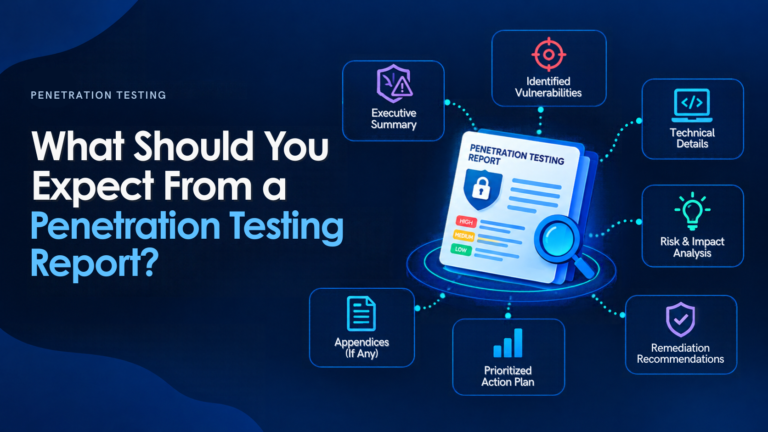
High-risk roles including finance, executive assistants, HR, and IT helpdesk warrant more frequent targeted simulations because they are consistently the highest-value targets for social engineering attacks and because a successful attack against them has higher organizational impact than the same attack against a lower-risk role.
Frequently Asked Questions
Is social engineering testing the same as security awareness training?
No. Social engineering testing measures whether employees would fall for an attack before training occurs. Security awareness training addresses the vulnerability that testing identified. Both are necessary, and the order matters: testing first establishes the baseline and makes the training more credible by demonstrating real vulnerability to real people rather than describing hypothetical risks. Running training without testing means investing in a program without knowing whether it addresses the actual vulnerabilities present in that specific organization.
Do employees find out they were part of a social engineering test?
Yes, but usually after the fact and as part of a constructive learning experience rather than a punitive one. The most effective post-simulation approach is to immediately notify employees who interacted with the simulation, explain what happened, why it worked, and what they should do differently. Employees who are notified in a non-punitive, educational way after clicking a phishing simulation are significantly more likely to report future suspicious communications than those who are not notified or who receive only a negative message.
Can we run social engineering tests without telling the IT or security team?
In a genuine social engineering test that includes testing detection and response capabilities, the security team operates without knowing the exercise is happening, which is the same model as a red team engagement. A small number of senior stakeholders are informed, typically the CISO or security leadership, but the operations team and helpdesk function without that knowledge so their responses can be evaluated under realistic conditions.
What is the difference between phishing simulation and a real phishing attack?
A phishing simulation uses controlled infrastructure, an agreed scope, and no actual malicious payload. Clicking a simulation link takes the employee to an educational landing page rather than delivering malware or capturing real credentials for malicious use. The employee’s emotional and behavioral response is genuine, which is what the test measures, but no real harm occurs. A real phishing attack delivers actual malware, captures real credentials, and attempts to establish persistence in the organization’s environment.
How do we measure whether our social engineering posture is improving?
The metrics that indicate genuine improvement are: a decreasing click rate across successive phishing simulations of similar complexity, an increasing reporting rate showing more employees are actively flagging suspicious communications, a shorter time between simulation launch and first report to the security team, and a decreasing credential submission rate among employees who do click. A program that shows all four trends moving in the right direction across successive campaigns demonstrates measurable improvement in human security posture.
The Vulnerability That Does Not Appear on a Vulnerability Scanner
Every technical vulnerability in your environment can be catalogued, prioritized by severity, and tracked to remediation. The human vulnerabilities, which employees submitting their credentials to a convincing phishing page, a helpdesk agent would reset a password without proper verification, or a department scanning a found USB device without thinking twice, cannot be found by a scanner. You can only find them by testing.
Social engineering testing does not produce a list of misconfigured servers or outdated software. It produces something more specific and in many ways more valuable: an accurate picture of whether the people in your organization would stop an attack that bypassed every technical control you have in place. That picture is the starting point for the training, the process changes, and the cultural investment that makes human security posture genuinely improve rather than just assuming that awareness exists because awareness training was completed.
The organizations that take social engineering testing seriously are the ones that treat it as a measurement program rather than a one-time event, that use the data to drive specific improvements rather than generic training, and that understand that the human layer of their security program needs the same rigorous testing discipline they apply to their technical infrastructure.
Contact us to discuss a social engineering assessment for your organization