What Is Cloud Security and How Does It Work?

Written By
Sarwat Iftikhar

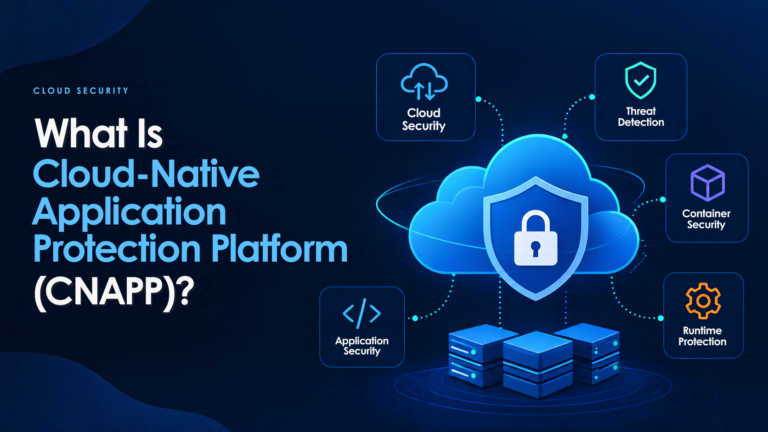
Cloud security is the combination of policies, controls, and technical safeguards that protect data, applications, and infrastructure hosted on platforms like AWS, Azure, and Google Cloud. It works through a shared responsibility model, where the cloud provider secures the underlying infrastructure and the business is responsible for securing everything it configures and deploys on top of it, including identity permissions, data access, and network settings.
That shared responsibility line is where most cloud breaches actually happen. The provider’s data centers are rarely the weak point. A misconfigured storage bucket, an overprivileged service account, or an exposed API endpoint, all squarely on the customer’s side of the line, are what attackers find first. Cloud security exists to close exactly that gap, and it looks fundamentally different from traditional on-premises security because the attack surface is architectural rather than perimeter-based.
For a business owner evaluating what this actually means in practice, the stakes are direct. Nearly every SaaS, fintech, and e-commerce business runs some part of its infrastructure in the cloud today, which means cloud misconfigurations are no longer a niche risk. They are one of the most common root causes behind the breaches that make headlines.
Key Takeaways
- Cloud security operates on a shared responsibility model: the provider secures the infrastructure, the business secures what it configures on top of it.
- The most common cloud security failures are IAM misconfigurations, exposed storage, and overprivileged service accounts, not provider-level infrastructure flaws.
- Cloud security posture tools flag configuration issues; only cloud penetration testing proves whether those issues are actually exploitable.
- AWS, Azure, and GCP each require provider-specific expertise since their IAM models and service architectures differ significantly.
- Cloud security is strongest when continuous monitoring, vulnerability management, and periodic manual testing all run together, not as substitutes for one another.
What Is Cloud Security?
Cloud security is the set of practices, controls, and technologies used to protect cloud-hosted data, applications, and infrastructure from unauthorized access, misconfiguration, and exploitation. It spans identity and access management, network configuration, data encryption, logging and monitoring, and the security of the applications and APIs running on top of the cloud environment.
Unlike traditional infrastructure security, cloud security is defined by a shared boundary. The cloud provider is responsible for the security of the cloud, physical data centers, hardware, and the underlying virtualization layer. The customer is responsible for security in the cloud, everything they configure: IAM policies, storage permissions, network rules, and the applications they deploy. Misunderstanding where that line sits is one of the most consistent causes of cloud breaches.
How Does Cloud Security Work?
Cloud security works through five layers operating together: identity and access management, network security, data protection, workload and application security, and continuous monitoring. Each layer addresses a different part of the shared responsibility boundary, and a gap in any one layer can undermine the others.
| Layer | What It Covers |
| Identity and access management | Who can access what, enforced through roles, permissions, and least-privilege policies |
| Network security | Segmentation, firewalls, security groups, and controlling what is exposed to the internet |
| Data protection | Encryption at rest and in transit, storage access controls, and backup security |
| Workload and application security | Securing the applications, containers, and APIs running on cloud infrastructure |
| Continuous monitoring | Logging, alerting, and ongoing detection of configuration drift and suspicious activity |
Source: Bugstrix cloud security framework, 2026
Identity and access management is consistently the layer where the most damaging misconfigurations occur. Overprivileged service accounts, unused credentials, and permission chains that allow privilege escalation are the pattern behind most serious cloud incidents, more often than any single exposed port or outdated software version.
Network security in the cloud context is less about a hardened perimeter and more about correctly scoping what’s actually exposed. A single misconfigured security group rule can expose a database directly to the internet, something a traditional firewall model would never allow by default.
Data protection covers encryption and access controls for the storage layer, where a single publicly accessible bucket can expose the same volume of data as a full application breach.
Workload and application security addresses the applications, containers, and APIs actually running on the cloud infrastructure, since securing the platform underneath does nothing if the application on top has an authorization flaw.
Continuous monitoring closes the loop, since cloud environments change constantly and a security posture that was correct last month can drift out of compliance the moment a new service gets deployed.
What Are the Most Common Cloud Security Risks?
The most common cloud security risks are IAM misconfigurations, publicly exposed storage, overly permissive network rules, and insecure APIs, and all four are customer-side responsibilities rather than provider infrastructure failures. Automated posture scanning tools can flag these issues, but flagging is not the same as proving they’re actually exploitable.
The findings that matter most rarely come from a single misconfiguration. They come from chains: a service account with slightly excessive permissions, combined with a trust relationship between two services, combined with a storage bucket that shouldn’t be reachable from that role. Individually, a scanner may not flag any of the three as critical. A human tester maps the chain and demonstrates the actual impact.
How Is Cloud Security Different From Cloud Penetration Testing?
Cloud security is the ongoing discipline of protecting your cloud environment. Cloud penetration testing is a specific, manual engagement that actively proves whether your cloud security controls actually hold up against a real attack. One is a continuous practice; the other is periodic validation of that practice.
This distinction matters because posture management tools and cloud security controls can look correct on paper while still containing exploitable gaps that only manual testing surfaces. Our cloud penetration testing services test AWS, Azure, and GCP environments specifically for IAM privilege escalation, cross-account trust issues, exposed services, and insecure APIs, going beyond what automated posture scanning can confirm. For a full breakdown of what this actually costs and what drives the price, the guide on how much cloud penetration testing costs in 2026 covers the range across single-cloud, multi-cloud, and enterprise environments.
Curious whether your current cloud setup would hold up under a real test? Get a free quote for a cloud penetration test and we’ll scope it against your specific environment.
How Does Cloud Security Fit Into Vulnerability Management?
Cloud security is one of the domains a vulnerability management program has to cover continuously, since cloud environments change constantly and a configuration that was secure last month can drift out of compliance the moment a new service, role, or storage bucket gets added. Treating cloud security as a one-time setup rather than an ongoing discipline is one of the most common gaps in otherwise mature security programs.
Bugstrix’s guide on what vulnerability management actually is covers the five-part cycle, asset discovery, scanning, prioritization, remediation, and verification, that applies directly to cloud environments. Cloud assets are exactly the kind of fast-changing inventory that makes continuous discovery essential rather than optional.
Manual vs Automated Cloud Security Testing: What’s the Real Difference?
Automated tools and manual testing find different categories of cloud security issues, and cloud environments make this gap especially wide because IAM permission chains require human reasoning to evaluate properly. A scanner can flag that a role has an excessive permission. It cannot determine whether that permission, combined with two others across different services, creates a path to full administrative access.
A detailed comparison of manual vs automated penetration testing covers this distinction in depth, including the data behind why automated scanning alone consistently misses the chained, context-specific vulnerabilities that cause the most damaging cloud breaches. The businesses that get real value from cloud security run both: continuous automated posture monitoring to catch drift quickly, paired with periodic manual testing to validate whether the controls actually hold.
What Does It Cost to Test Your Cloud Security?
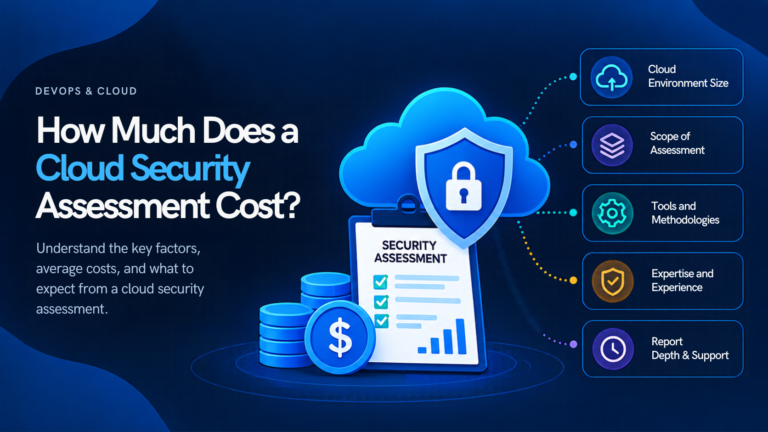
Cloud penetration testing costs between $8,000 and $50,000 for most mid-market engagements in 2026, with enterprise environments running $50,000 or more depending on the number of cloud accounts, architectural complexity, and depth of IAM testing required.
| Environment Type | Cost Range |
| Single cloud, limited scope | $8,000 – $15,000 |
| Single cloud, full scope | $15,000 – $25,000 |
| Multi-cloud environment | $25,000 – $50,000 |
| Enterprise with Kubernetes | $50,000 – $100,000+ |
Source: Bugstrix, How Much Does Cloud Penetration Testing Cost in 2026?
IAM configuration depth is consistently the biggest driver of cost, more than the raw number of cloud accounts or hosts in scope. A small environment with highly complex identity relationships can cost more to test properly than a larger one with straightforward permissions.
How Do You Build a Cloud Security Strategy for Your Business?
Building a cloud security strategy starts with mapping the shared responsibility boundary for your specific cloud provider, then layering identity controls, network segmentation, data protection, and continuous monitoring on top of that understanding, before validating the whole thing with manual testing.
A practical starting sequence:
- Map what you’re actually responsible for. Confirm exactly where your cloud provider’s responsibility ends, and yours begins for every service you use, not just compute and storage.
- Enforce least-privilege IAM from the start. Default to minimal permissions and expand deliberately, rather than granting broad access and trying to narrow it later.
- Encrypt data at rest and in transit by default. Treat encryption as a baseline requirement, not an optional hardening step applied after launch.
- Segment your network deliberately. Don’t rely on default configurations for what’s exposed to the public internet.
- Monitor continuously. Configuration drift happens constantly in active cloud environments, and logging is what makes drift visible before it becomes an incident.
- Validate with manual testing. Vulnerability assessment and web application testing both play a role here. Our vulnerability assessment services provide ongoing visibility, while web app penetration testing covers the applications running on top of your cloud infrastructure that a cloud-focused test alone wouldn’t reach.
Contact Us to talk through where your current cloud environment stands against this sequence.
Is Investing in Cloud Security Worth It for Your Business?
Cloud security is worth the investment for any business running production workloads in the cloud, because the cost of a misconfigured IAM policy or exposed storage bucket, measured in breach response, regulatory exposure, and customer trust, is dramatically higher than the cost of catching it first. A cloud penetration test that identifies one critical privilege escalation path before an attacker finds it represents a return that’s difficult to match with any comparable security investment.
The businesses that get the least value from cloud security treat it as a one-time setup task completed at launch and never revisited. The businesses that get the most value treat it as a continuous discipline: monitored constantly, reassessed as the environment changes, and validated periodically through manual testing rather than assumed to be correct because it was correct once.
Frequently Asked Questions
What is cloud security in simple terms?
Cloud security is the practice of protecting data, applications, and infrastructure hosted on cloud platforms like AWS, Azure, or Google Cloud. It works through a shared responsibility model where the provider secures the underlying infrastructure and your business secures everything configured on top of it.
Who is responsible for cloud security, the provider or the customer?
Both, under what’s called the shared responsibility model. The cloud provider secures the physical infrastructure, hardware, and virtualization layer. The customer is responsible for identity and access management, data protection, network configuration, and the security of applications deployed on the platform.
Is a cloud security posture scan the same as a cloud penetration test?
No. A posture scan uses automated tools to flag configuration issues against best practices. A cloud penetration test has a human tester actively exploiting confirmed vulnerabilities to prove whether they lead to a genuine attack path, which a scan alone cannot confirm.
How often should cloud security be tested?
Most compliance frameworks require testing at least annually, but major changes, new service deployments, IAM policy overhauls, or new cloud accounts should each trigger a targeted assessment rather than waiting for the next scheduled cycle.
Does cloud security testing require provider approval?
Yes. AWS, Azure, and Google Cloud all require notification before penetration testing begins and prohibit testing provider-managed infrastructure directly. A qualified testing provider handles this authorization process as part of scoping the engagement.
Security Follows the Shared Responsibility Line
Cloud security is not primarily about trusting your provider. AWS, Azure, and GCP secure their infrastructure well. It’s about rigorously securing everything on your side of the shared responsibility boundary, the IAM policies, storage permissions, and application logic that your team configures and that attackers consistently target first.
Getting this right means treating cloud security as a continuous discipline rather than a launch-day checklist: enforcing least privilege from the start, monitoring for drift constantly, and validating your actual exposure with manual testing rather than assuming a clean posture scan means you’re safe.
If you’re ready to find out what a real attacker could actually reach in your cloud environment, talk to our cloud security team about scoping a test against your specific AWS, Azure, or GCP setup.