How to Choose the Right Website Security Company for Your Business?

Written By
Sarwat Iftikhar
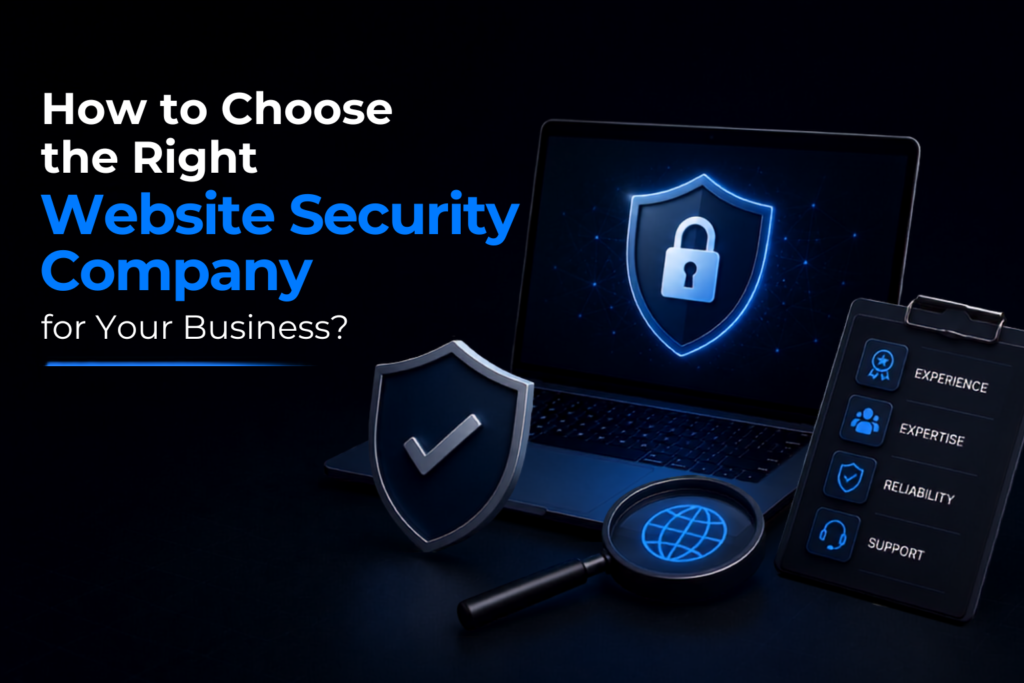
The right website security company is the one that runs manual, expertise-led testing rather than relying on automated scans, provides evidence-backed reports with clear remediation steps, includes retesting in the engagement, and has direct experience with your industry’s attack patterns. Price should be the last factor you compare, not the first, since a cheap engagement built around a scanning tool will miss the business logic and access control flaws that lead to actual breaches. Evaluating a vendor on methodology, tester expertise, and report quality gives a far more reliable signal of whether they will actually reduce your risk.
The rest of this post breaks down each of these criteria in detail, along with the red flags that should make you walk away from a vendor before signing a contract.
Key Takeaways
- Methodology depth, not price, is the strongest predictor of whether a website security company will find the vulnerabilities that actually matter.
- Manual testing by experienced testers consistently uncovers business logic flaws and chained vulnerabilities that automated scanning tools miss entirely.
- A quality report includes exploitation evidence and specific remediation guidance, not a generic list of findings copied from a scanning tool.
- Industry experience matters because attack patterns differ meaningfully across fintech, SaaS, healthcare, and e-commerce environments.
- Retesting after remediation should be included in the engagement, not billed as a separate project.
Why Does the Right Website Security Company Matter So Much?
The right website security company matters because a website breach carries costs far beyond the immediate incident, including regulatory fines, customer churn, and long-term reputational damage that outlasts the technical fix. A vendor that misses a critical flaw does not just fail to find a bug. It leaves your business exposed while giving you a false sense of security that you are covered.
Website attacks increasingly target business logic and application-layer weaknesses rather than outdated software versions, which is exactly the category of flaw that automated tools are worst at catching. A security company that relies primarily on scanning software will consistently miss the vulnerabilities that lead to actual breaches, such as broken access controls, authentication bypass paths, and privilege escalation chains that only a human tester thinking like an attacker would uncover.
Choosing the wrong vendor is not a neutral decision. It actively works against your security posture by consuming budget and internal time while leaving genuine risk on the table.
What Should You Look for in a Website Security Company’s Methodology?
You should look for manual testing performed by experienced testers. This methodology explicitly covers business logic and access control flaws, and transparency about what tools and techniques are used at each stage of the engagement. Automated scanning has a reconnaissance role, but it cannot replace a skilled tester manually probing your application the way a real attacker would.
Ask any prospective vendor how much of the engagement is manual versus automated, and be wary of vague answers. A credible firm should be able to describe its process clearly: initial reconnaissance and scoping, automated discovery to map the attack surface, manual exploitation of identified weaknesses, and a structured verification phase before findings are written up. If a vendor cannot walk you through this process without leaning on marketing language, that is a signal worth taking seriously.
Our approach to web application penetration testing follows this manual-first methodology, targeting the business logic and access control issues that scanners consistently miss.
How Do You Evaluate a Security Company’s Tester Expertise?
You evaluate tester expertise by asking about certifications, requesting anonymized sample reports, and confirming that the testers assigned to your engagement have direct experience with your specific technology stack and industry. A firm’s overall reputation does not guarantee that the individual testers on your project have the right background for your environment.
Certifications such as OSCP, OSCE, and CREST provide a useful baseline, but they should be treated as a floor rather than a ceiling. More telling is whether the firm can show you a redacted sample report that demonstrates depth: clear reproduction steps, business impact framed in terms relevant to your industry, and remediation guidance specific enough that your development team could act on it without further clarification.
Industry familiarity matters more than buyers often expect. A tester experienced with e-commerce checkout flows will approach a fintech payment API differently than one who has only tested internal enterprise tools. That difference in perspective directly affects which vulnerabilities get found.
What Should a Quality Security Report Actually Include?
A quality security report should include a clear scope definition, findings documented with reproducible evidence, business impact context for each vulnerability, and remediation guidance specific enough to act on without further back-and-forth. A report that lists generic CVSS scores without exploitation evidence or business context is a scanning output dressed up as a penetration test.
The components that separate a genuinely useful report from a checkbox deliverable:
| Report Component | What It Should Contain |
| Executive summary | Business-level risk overview for non-technical stakeholders |
| Technical findings | Step-by-step reproduction and proof-of-concept evidence |
| Severity ratings | Risk framed around actual business impact, not just CVSS |
| Remediation guidance | Specific, actionable fixes mapped to your stack |
| Retest results | Confirmation that fixes actually closed the gap |
Every critical and high-severity finding should include evidence that the vulnerability was confirmed exploitable, not merely theoretically possible. Without that evidence, severity ratings are opinions rather than demonstrated facts, and your development team is left guessing how urgently to prioritize the fix.
How Important Is Retesting After Remediation?
Retesting after remediation is essential because a fix that looks correct on the surface can still leave the underlying vulnerability exploitable through a slightly different path. A security company that does not include retesting in its engagement structure is leaving the most important question unanswered: did the fix actually work?
Ask upfront whether retesting is included in the base engagement price or billed separately, since this varies significantly between vendors and affects your total cost of ownership. A firm confident in the quality of its findings will typically build at least one retest cycle into the standard engagement, because verifying remediation is part of delivering complete value rather than an upsell.
This is also where ongoing relationships matter more than one-off engagements. Applications change constantly, and a vendor familiar with your environment from a prior engagement will scope and execute a retest more efficiently than one starting from zero.
Should You Choose a Company Based on Industry Specialization?
You should weigh industry specialization heavily when your business handles regulated data, processes payments, or operates in a sector with well-documented attack patterns, since a tester unfamiliar with those patterns is more likely to miss context-specific risks. General web application security knowledge is necessary but not sufficient for environments with sector-specific compliance and threat models.
A fintech company evaluating a security company should confirm experience with payment flows, PCI DSS-relevant findings, and API security specific to financial transactions. A healthcare organization should confirm familiarity with the access control patterns that protect patient data. A SaaS company serving multiple customers on shared infrastructure should confirm the vendor understands multi-tenant isolation testing, since cross-tenant data leaks are a category of risk that generic web testing does not reliably surface.
Our post on how often a fintech company should run a penetration test goes deeper into how industry-specific risk should shape testing frequency and scope.
What Red Flags Should Make You Walk Away From a Vendor?
The clearest red flags are vendors that cannot explain their methodology beyond naming a scanning tool, refuse to provide a sample report, quote a price without a scoping conversation, or promise a guaranteed pass on compliance audits. Any of these signals should prompt further questions before you commit budget to the engagement.
A firm that quotes a fixed price without first understanding your application’s size, authentication model, and complexity is either padding the estimate heavily or planning to run a shallow, templated test regardless of what your environment actually needs. Scoping conversations exist because environments genuinely differ, and a vendor skipping that step is skipping the step that determines whether the engagement will find anything meaningful.
Similarly, no legitimate security company can guarantee that you will pass a compliance audit, since audit outcomes depend on far more than penetration test results. Vendors making that promise are prioritizing the sale over an honest account of what testing can and cannot do for you.
How Do You Compare Pricing Across Website Security Companies?
You compare pricing by normalizing for scope, not just the headline number, since two quotes for what looks like the same engagement can reflect very different amounts of manual testing time. A lower quote is often lower because it covers less ground, not because the vendor is more efficient.
Ask each vendor to break down what is included: how many testing days, how many retests, what report format, and whether business logic testing is explicitly scoped in or treated as optional. Comparing apples to apples requires getting past the total price to the actual deliverable underneath it.
Our penetration testing services are scoped around the specific complexity of your environment rather than a flat package rate, because the right depth of testing depends on what you are actually trying to protect.
Frequently Asked Questions
How much should website security testing cost?
Cost varies significantly based on application complexity, ranging from a few thousand dollars for a focused single-application test to well into five figures for complex, multi-tenant environments. The right question is not the lowest price available but whether the scope and methodology match what your application actually needs.
How often should a business test its website security?
Most businesses benefit from at least an annual penetration test, with additional targeted testing after major application changes, new feature launches, or infrastructure migrations. Applications that change frequently are better served by more regular scoped testing rather than relying solely on an annual full-scope engagement.
Is an automated vulnerability scan enough for website security?
No. Automated scans are useful for quickly identifying known, cataloged vulnerabilities, but they consistently miss business logic flaws, chained vulnerabilities, and access control issues that require a human tester to detect. Scans and manual penetration testing serve different purposes and are not substitutes for each other.
What certifications should a website security company’s testers hold?
Look for recognized certifications such as OSCP, OSCE, or CREST as a baseline indicator of skill, but treat them as one input among several. Direct experience with your technology stack and industry, along with sample report quality, are equally important indicators of whether a tester will find what matters in your specific application.
Choosing With Confidence
The businesses that end up satisfied with their website security company are the ones that evaluated methodology and report quality before price, asked pointed questions about tester expertise, and confirmed retesting was part of the engagement rather than an afterthought. The businesses that end up disappointed are usually the ones that picked based on the lowest quote and found out too late what that quote did not include.
A website breach is expensive in ways that go well beyond the immediate incident response cost. Choosing the right security partner up front is one of the most consequential decisions a growing business makes regarding its risk exposure.