What’s the Difference Between Penetration Testing and Security Audits?

Written By
Sarwat Iftikhar

Most security conversations treat penetration testing and security audits as interchangeable. Vendors bundle them together. Compliance checklists list both without explaining either. And buyers end up paying for one when they actually need the other, or, worse, assume one covers what only the other can deliver.
They are not the same. A security audit reviews your processes, policies, and configurations against a defined standard. A penetration test actively attacks your systems to prove what an attacker can actually break. Both matter. Neither replaces the other.
If you’ve ever wondered which one your team needs, when to run each, or how they fit together into a security program that actually works, this post answers all of it clearly.
Bugstrix offers penetration testing services built around manual exploitation, chained attack paths, and remediation guidance that is fix-ready. But before we get to that, here’s what you need to know about the difference.
Key Takeaways
- A security audit checks whether your security controls and policies meet a defined standard. A penetration test proves whether those controls can withstand a real attack.
- SOC 2 does not explicitly require penetration testing as a named control. Depending on the organization’s environment and the auditor’s evidence strategy, penetration testing may be used to support evaluation of relevant security controls.
- PCI DSS mandates penetration testing at least annually and after any significant system change, beyond a simple security review.
- 5.3 vulnerabilities are discovered every minute across thousands of assets (Cybersecurity Research, 2025). Penetration testers chain these into impact. Auditors document that controls exist to prevent it.
- The teams that get breached aren’t always the ones who skipped security entirely. They’re often the ones who ran one and assumed it covered everything.
What Is a Security Audit?
A security audit is a structured, systematic review of your organisation’s security controls, policies, configurations, and compliance posture. It asks a specific question: Does what you have in place meet the standard it’s supposed to meet?
Think of it like a building inspection. The inspector checks whether the wiring meets code, whether the fire exits are properly marked, and whether the load-bearing structures were built to specification. The inspection doesn’t try to knock the building down. It verifies that everything was built correctly and documents what wasn’t.
A security audit works the same way. It evaluates your technical configurations alongside your organisational processes, access control policies, incident response procedures, vendor management, staff security awareness, data handling practices, and backup verification. The output is a gap report: here’s what you have, here’s what the standard requires, here’s what’s missing.
What a security audit typically covers:
- Policy and procedure review (incident response, acceptable use, access control)
- Identity and access management evaluation (who has access to what, and why)
- Configuration and hardening checks across systems and cloud environments
- Compliance gap analysis for frameworks including SOC 2, PCI DSS, HIPAA, and ISO 27001
- Third-party vendor security review
- Physical security controls where applicable
- Staff awareness and security training assessment
The output is documentation-heavy by design. Security audits are built for compliance. They give you a structured, reviewable record of your security posture that satisfies auditors, boards, and enterprise buyers asking the right questions before signing a contract.
The key limitation is also by design. A security audit tells you that a control exists and appears correctly configured. It does not tell you whether a skilled attacker could bypass it. For that, you need something different.
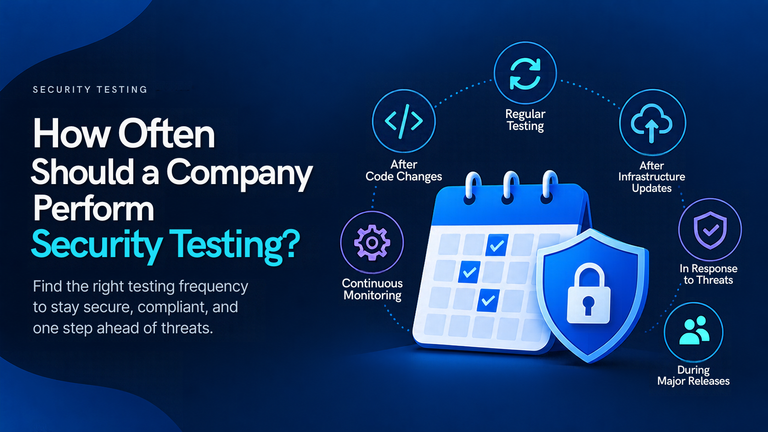
Best frequency: Quarterly audits are the general industry recommendation, with a full audit before any major compliance certification or renewal.
What Is Penetration Testing?
A penetration test is a manual, adversarial exercise where a skilled tester actively attempts to exploit vulnerabilities in your systems, applications, or infrastructure to demonstrate real-world impact. It doesn’t ask whether a control exists. It asks whether that control actually stops someone who knows what they’re doing.
The analogy that holds up: a building inspection checks whether the locks meet code. A penetration test hires a skilled lockpicker to try every door before you stake your valuables on those locks holding.
Where a security audit evaluates documentation and configuration, a penetration test produces evidence of exploitation. Working proof-of-concept exploits, documented attack chains, request and response captures showing exactly how access was gained, and remediation guidance mapped to your specific technology stack.
What a penetration test covers that no audit can:
- Active exploitation of technical vulnerabilities across web applications, APIs, networks, and infrastructure
- Business logic flaws specific to your application that no scanner or policy review will surface
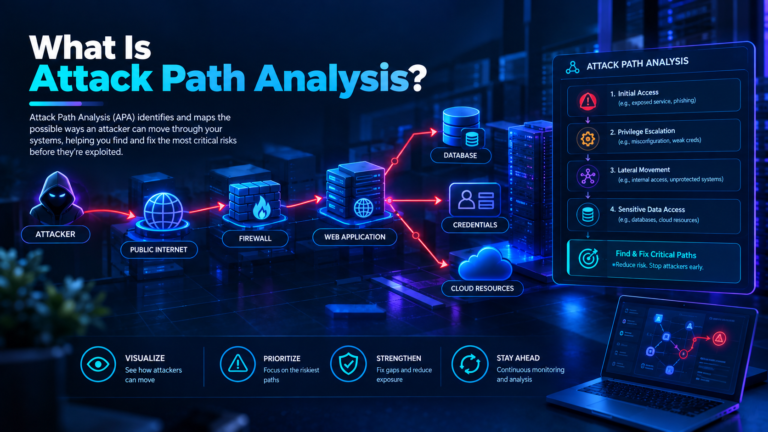
- Chained attack paths that turn multiple low-severity findings into a single critical-impact compromise
- Authentication bypass, insecure direct object references, injection attacks, and session management weaknesses
- Real attacker behaviour under realistic conditions, within an agreed scope and testing window
Web application penetration testing accounts for 35.6% of all penetration tests conducted globally (Market Research, 2025), reflecting where most organisational risk actually lies. If you want to understand what that looks like in practice, the Bugstrix guide to web application penetration testing walks through the full five-phase process in detail.
A penetration test takes one to four weeks, depending on the scope. It produces findings you can act on immediately, with severity ratings that reflect real-world exploitability rather than generic CVSS scores.
Best frequency: Annually at minimum, and after any significant release, infrastructure change, or new integration. PCI DSS makes this mandatory. SOC 2 and HIPAA increasingly expect it.
Security Audit vs Penetration Test: Side by Side
| Factor | Security Audit | Penetration Test |
| Purpose | Verify controls meet a defined standard | Prove controls withstand real attack |
| Method | Review, interview, configuration check | Manual exploitation by skilled testers |
| Output | Gap report, compliance checklist | PoC exploits, attack narrative, chained findings |
| Frequency | Quarterly | Annually or after major changes |
| Depth | Broad, processes, policies, configurations | Deep, specific systems, applications, logic |
| Duration | Days to weeks | One to four weeks |
| Best for | Compliance preparation, board reporting | Pre-launch, compliance mandates, breach validation |
Neither row says “better.” They serve different functions and answer different questions. The mistake is treating the table as a choice when it’s actually a sequence.
Where Most Teams Go Wrong
The most common mistake isn’t running either. It’s running one and assuming it covers what the other provides.
Mistake 1: Running only a security audit for compliance and calling it done
A security audit confirms that your access control policy is documented and that your configurations appear correct. It doesn’t confirm that a tester spent two weeks trying to break your authentication flow and failed. Compliance pass plus active vulnerability equals false confidence, and false confidence is exactly the gap attackers exploit.
SOC 2 auditors expect penetration test results as evidence for the Security (CC4.1) and Vulnerability Management (CC7.1) controls. A process review alone doesn’t satisfy this. If your auditor hasn’t asked for a pen test report, that’s worth clarifying before your next certification cycle.
Mistake 2: Running a penetration test without fixing the process gaps
A penetration test will find technical vulnerabilities. It won’t tell you that your offboarding process leaves former employees with active credentials for 30 days, or that your incident response plan hasn’t been tested since it was written. Those gaps require an audit. Finding and exploiting a technical flaw is not the same as building a security program that prevents the next one.
Mistake 3: Assuming infrastructure security covers application security
Your cloud provider secures the infrastructure layer. Your application logic, your APIs, and your authentication flows are yours. An audit might confirm that your cloud configuration meets a baseline standard. Only a penetration test proves whether your application can resist someone who knows what they’re doing.
The hard truths about penetration testing services post covers this in detail, including why most organisations discover these gaps after a breach rather than before.
When Should You Run a Security Audit?
Run a security audit when you need to verify that your security processes, policies, and configurations meet a defined standard, and when you need documentation to prove it.
You need a security audit if:
- You’re preparing for a SOC 2, ISO 27001, HIPAA, or PCI DSS certification and need to close compliance gaps before an external auditor arrives
- Your organisation has gone through a significant structural change, acquisition, rapid headcount growth, and major technology migration
- You’re onboarding a new enterprise customer or vendor who requires a documented security posture as part of their due diligence process
- Your board or leadership team needs a structured view of your security program that goes beyond “we think we’re secure”
- You’re an early-stage company building your first security program and need to understand where your baseline stands before you start testing
A vulnerability assessment sits alongside a security audit in this phase, mapping your technical attack surface so you understand what’s exposed before a formal compliance review begins.
When Should You Run a Penetration Test?
Run a penetration test when you need proof. Not documentation that a control exists, but evidence that it holds under real attack conditions.
You need a penetration test if:
- You’re launching a product or feature that handles user data, payment information, or sensitive records
- PCI DSS compliance applies to your organisation; it mandates pen testing at least annually and after any significant system change
- You’ve completed a security audit and want to confirm which gaps are actually exploitable before an attacker confirms it for you
- An enterprise buyer, investor, or partner has requested a pen test report as part of their security review process
- You’ve recently made significant changes to your infrastructure, deployed new integrations, or migrated to a new cloud environment
- You need to validate that a previously identified vulnerability or past breach has been fully remediated
The healthcare sector is growing at 17.2% CAGR through 2031, driven directly by incoming HIPAA revisions requiring annual penetration testing (Market Research, 2025). Regulated industries aren’t treating pen testing as optional anymore. The question is whether you run it proactively or because an auditor required it after the fact.
You can read more about what vulnerability assessment and penetration testing look like in practice and how to decide which engagement fits your current situation.
How Penetration Testing and Security Audits Work Together
The most resilient security programs don’t choose between an audit and a penetration test. They run both, in sequence, as part of a program that addresses both process and technical risk.
Here’s how that sequence works in practice:
The audit maps your control gaps. It identifies where your policies are incomplete, where your configurations drift from the standard, and where your compliance posture needs work. This gives you a structured picture of your process-level risk.
The penetration test proves which gaps are exploitable. It takes the technical weaknesses that the audit surface-level identifies and demonstrates what an attacker could actually do with them. The result is a prioritised list of fixes with real-world evidence attached, not a theoretical risk score.
Remediation closes both layers. Stack-specific fix guidance addresses the technical findings. Updated policies and procedures address the process gaps. Each set of fixes makes the other more effective.
Retesting confirms fixes hold. At Bugstrix, around 30% of findings marked as fixed still show the original vulnerability present or only partially patched when retested. The reason is almost always generic remediation advice that doesn’t translate cleanly into a real codebase. That’s why every Bugstrix engagement includes a retest, and why the 94% retest pass rate reflects stack-specific guidance rather than a generic PDF delivered and forgotten.
For teams shipping continuously, a continuous penetration testing program keeps pace with your release cadence rather than leaving a 363-day window of blind exposure between annual snapshots.
If you’re not sure which engagement is the right starting point for your team, contact the Bugstrix team, and we’ll help you scope the right approach.
Know Which One Your Team Actually Needs?
Most organisations need both, but not always at the same time or in the same scope. The right starting point depends on your compliance requirements, your release cadence, and the balance of technical versus process-level risk you’re carrying.
Get a free quote from Bugstrix by telling us where you are in your security program and what you’re working toward. We’ll scope the right engagement: a security audit, a penetration test, or a combined program that addresses both layers.
Frequently Asked Questions
Can a security audit replace a penetration test?
No. A security audit verifies that controls exist and appear correctly configured. A penetration test proves that those controls withstand active exploitation. SOC 2 auditors expect penetration test results as evidence for specific controls, and PCI DSS explicitly mandates penetration testing. A process review satisfies different requirements than a technical exploitation exercise, and the two are not interchangeable in either direction.
Which one does SOC 2 or PCI DSS require?
PCI DSS is explicit: penetration testing is required at least annually and after any significant change to the cardholder data environment. SOC 2 doesn’t mandate penetration testing in its written criteria, but auditors increasingly expect it as evidence for the Security (CC4.1) and Vulnerability Management (CC7.1) controls during Type II assessments. For HIPAA, proposed 2025 updates move toward mandatory annual security testing for covered entities. If you’re unsure of your specific framework requirements, a scoping conversation with Bugstrix will clarify them.
How much does each cost?
A security audit varies widely based on scope and the framework being assessed, but typically runs from $5,000 to $30,000 for a mid-sized organisation. A penetration test ranges from $5,000 to $50,000 or more, depending on scope, complexity, and depth of coverage. Both figures are significantly lower than the average cost of a data breach, which makes the framing straightforward: the audit and the pen test together cost less than the forensics bill after a serious incident.
How long does each take?
A focused security audit typically takes one to three weeks, depending on the number of frameworks being assessed and the complexity of the organisation. A penetration test takes one to four weeks, depending on scope: a focused web application test runs five to ten days, while a comprehensive engagement covering applications, APIs, infrastructure, and cloud environments runs three to four weeks. Neither should be rushed; the value of both lies in thoroughness, not speed.
What should I run first as an early-stage startup?
Start with a security audit and a vulnerability assessment to understand your baseline posture and close obvious process and configuration gaps. Then run a penetration test before your first significant product launch or before entering any enterprise sales process that will ask for one. The audit tells you where your program stands. The pen test proves that your application holds up under real conditions. Running them in that order makes both more effective and the findings easier to act on.
The Bottom Line
Security audits and penetration tests are not competing options. They’re complementary tools that address different layers of your security program: one verifies that your controls and policies meet a defined standard, the other proves that your systems withstand real attack conditions.
The organisations that get breached aren’t always the ones that skipped security entirely. They’re often the ones who ran an audit and checked the compliance box without confirming the technical risk. Or ran a pen test once and didn’t address the process gaps that let the vulnerability exist in the first place.
A complete security program needs both. Start with your biggest gap, use each tool for what it was built for, and don’t let a compliance pass convince you that you’re secure until a skilled tester tries to prove otherwise.