Agentic AI Is Redefining Cybersecurity Threat Intelligence

Written By
Sarwat Iftikhar

Agentic AI refers to artificial intelligence systems that can pursue goals autonomously through multi-step reasoning, decision-making, and action, without requiring a human to direct every move. Unlike conventional AI tools that respond to a single prompt, agentic systems plan, execute, observe outcomes, and adjust their approach in real time.
In a cybersecurity context, this distinction is critical. A generative AI tool might help a threat actor draft a phishing email. An agentic AI system, by contrast, can identify a target, craft a personalised spear-phishing message, bypass multi-factor authentication, move laterally through a network, exfiltrate data, and cover its tracks, all within a single autonomous operation.
This is not a theoretical scenario. Security researchers documented the first large-scale AI-orchestrated cyber espionage campaign in late 2025, marking a turning point in the threat landscape. The era of fully autonomous cyberattacks has arrived.
How Agentic AI Is Changing the Threat Intelligence Landscape
Traditional threat intelligence relies on pattern recognition: studying known attack signatures, monitoring indicators of compromise, and using historical data to predict future threats. Agentic AI disrupts this model in three fundamental ways.
1. Attack Behaviour Is No Longer Predictable
Agentic systems do not follow fixed playbooks. They adapt based on what they encounter. When an autonomous agent meets a defensive control, it pivots. This means that signature-based detection, which underpins most SIEM and EDR platforms, struggles to identify agentic threats because attack behaviour changes dynamically during an operation.
Security teams that rely entirely on known indicators of compromise will find themselves consistently one step behind autonomous systems that rewrite their own tactics in real time.
2. Attack Scale Has Multiplied Exponentially
A single threat actor operating with agentic AI tools can effectively run hundreds of concurrent attack operations. Each agent operates independently, scanning for vulnerabilities, probing authentication systems, and testing injection points simultaneously across multiple targets. This is not a marginal improvement in attacker capability. It is a structural shift in the economics of cybercrime.
For context, 48% of cybersecurity professionals now rank agentic AI as the single most dangerous attack vector of 2026, according to industry polling conducted earlier this year. Organisations that have not adjusted their threat models are already behind.
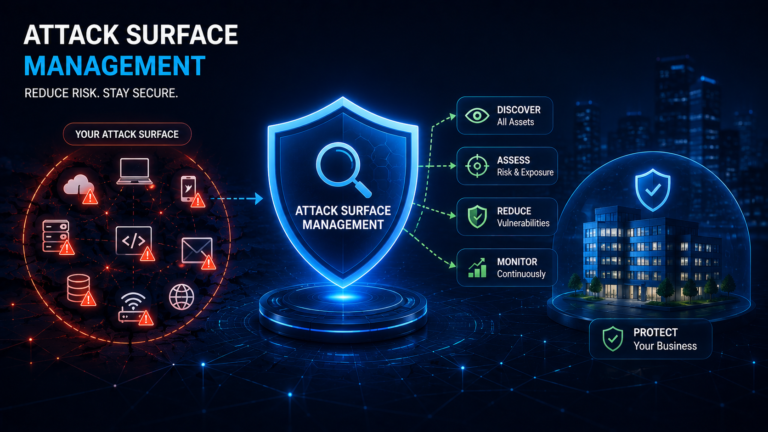
3. The Attack Surface Has Expanded Beyond Traditional Boundaries
The enterprise adoption of agentic AI tools has introduced an entirely new category of attack surface. AI agents deployed inside organisations hold elevated permissions, access sensitive systems, and operate with minimal human oversight. A compromised or manipulated agent does not just leak data. It can take autonomous action across your entire infrastructure.
This is precisely why Bugstrix’s approach to vulnerability assessment now includes AI-specific attack surface mapping, identifying not just where your code is exposed, but where your autonomous workflows create exploitable access paths.
For organisations running workloads on AWS, Azure, or GCP, cloud penetration testing helps identify where AI agents create exploitable access paths in their cloud environments.
The Emerging Attack Techniques Security Teams Must Understand
To build effective defenses, security teams need to understand the specific techniques agentic AI enables. These are not abstract risks. They are documented, active, and escalating.
Prompt Injection and Agent Hijacking
Prompt injection is the agentic AI equivalent of SQL injection. By embedding malicious instructions within content that an AI agent processes, such as a document, email, or web page, an attacker can redirect the agent’s behaviour without ever touching the underlying system. A customer service agent who reads an attacker-controlled email can be instructed to exfiltrate conversation data, modify user records, or initiate unauthorized transactions.
Memory Poisoning
Many agentic AI systems maintain persistent memory to improve performance across sessions. Attackers can poison this memory by feeding false information into an agent’s long-term storage. The agent then carries corrupted beliefs about vendor identities, approved payment addresses, and security policies into future operations. By the time the manipulation is discovered, the damage is already done.
Cascading Multi-Agent Failures
Modern enterprise environments increasingly rely on networks of AI agents that communicate with each other. When one agent in that network is compromised, the corruption can rapidly propagate to downstream agents. Research into multi-agent system failures has demonstrated that a single compromised node can corrupt the decision-making of the majority of agents in a connected system within hours.
This is why understanding your full attack surface, including your AI agent infrastructure, is a non-negotiable part of a modern security posture.
Why Traditional Cybersecurity Defenses Are Insufficient
The tools most organisations depend on, including firewalls, SIEM platforms, endpoint detection, and rule-based automation, were designed for human attackers operating within predictable patterns. Agentic AI attacks break every assumption those tools are built on.
Signature detection fails because agentic attacks do not repeat the same behaviour twice. The agent adapts, so the signature never stabilises.
Alert-based monitoring struggles because agentic attacks generate activity that looks normal at every individual step. An agent executing 10,000 sequential operations at machine speed registers as routine system behaviour until the full chain is analysed.
Static rule engines cannot keep pace because agentic systems specifically probe for the boundaries of rule enforcement and operate in the gaps.
This does not mean existing defenses are worthless. It means they must be augmented with approaches specifically designed for autonomous threat actors. Organisations that treat their 2023 security stack as adequate for 2026 threats are carrying a risk they have not yet quantified.
Building a Cybersecurity Defense Architecture for the Agentic AI Era
Defending against agentic AI requires a shift from reactive detection to proactive, intelligence-driven defense. The following principles form the foundation of a resilient defense architecture.
Implement Identity-Centric Security
Agentic systems operate through identities such as API keys, service accounts, and OAuth tokens. Securing these non-human identities with the same rigour applied to human accounts is essential. Every agent should operate with the least privilege, and all agent actions should generate immutable audit trails.
Extend Zero Trust to AI Workflows
Zero Trust architecture assumes no entity, whether human or machine, is trusted by default. Applying this to AI agent workflows means every agent action must be authenticated, authorized, and logged. Inter-agent communication should be treated as an untrusted channel until verified.
Deploy Behavioural Detection Over Signature Detection
Behavioural detection monitors what entities do rather than matching their appearance. For agentic threats, this means building baselines for normal agent behaviour and flagging deviations such as unusual API call sequences, unexpected data access patterns, and anomalous inter-system communication.
Conduct AI-Specific Penetration Testing
Understanding how agentic AI can be weaponised against your specific environment requires hands-on offensive testing. Bugstrix’s penetration testing services include AI attack surface assessments that map how autonomous systems could be used to compromise your infrastructure, identifying exploitable paths before attackers do.
Establish AI Governance and Agent Lifecycle Management
Every AI agent deployed in your environment should be inventoried, scoped, and governed. Shadow agents, autonomous workflows created by employees outside IT oversight, are an active and growing threat vector. Governance frameworks that enforce agent registration, permission auditing, and lifecycle management are now a core security requirement.
What Organisations Should Do Right Now
The threat is active. The tools exist. The question is not whether your organisation will encounter agentic AI threats. The question is whether you will be prepared when you do.
Start with visibility. You cannot defend what you cannot see. Audit your AI agent inventory, map the permissions each agent holds, and identify where autonomous workflows interact with sensitive systems.
Next, test your assumptions. Most security teams have not yet run exercises that simulate agentic attack scenarios. Tabletop exercises, red team engagements, and vulnerability assessments that include AI-specific attack vectors will surface gaps that conventional testing misses.
Finally, close the governance gap. More than 60% of organisations still lack mature AI governance frameworks. Without clear policies governing how agents are deployed, what they can access, and how their behaviour is monitored, every AI tool your organisation adopts is a potential liability.
The organisations that treat agentic AI governance as a security priority today will be the ones that avoid becoming tomorrow’s case studies. If you are not sure where to start, the Bugstrix team is available to help you assess your exposure and build a roadmap that addresses both your current vulnerabilities and the autonomous threats your existing stack was never designed to handle.
Frequently Asked Questions
What is agentic AI in cybersecurity?
Agentic AI in cybersecurity refers to autonomous AI systems capable of planning, executing, and adapting multi-step attack or defense operations without continuous human direction. Unlike standard AI tools, agentic systems pursue goals independently, making them significantly more dangerous as attack tools and more powerful as defensive platforms.
How does agentic AI differ from traditional malware?
Traditional malware follows pre-written instructions. Agentic AI systems reason, adapt, and respond to obstacles in real time. They can pivot tactics when they encounter defenses, making them far harder to detect and contain using conventional signature-based security tools.
What industries are most at risk from agentic AI cyberattacks?
Financial services, healthcare, critical infrastructure, SaaS platforms, and any organisation operating interconnected AI workflows face elevated risk. Industries with high-value data and complex digital ecosystems are primary targets for agentic AI-powered attacks.
Can existing cybersecurity tools detect agentic AI threats?
Partially. Legacy signature-based tools struggle against agentic threats because attack behaviour changes dynamically. Behavioural detection systems, identity security platforms, and AI-specific threat intelligence are better suited to identifying autonomous attack activity.
How should organisations prepare for agentic AI threats?
Organisations should audit their AI agent inventory, implement zero trust principles across AI workflows, deploy behavioural detection, conduct AI-specific penetration testing, and establish formal AI governance policies. Proactive vulnerability assessment is the most reliable way to identify exposure before it is exploited.
Is your organisation prepared for the agentic AI threat landscape?
Bugstrix specializes in identifying vulnerabilities that autonomous systems can exploit before attackers do. Get a Free Quote today and take the first step toward a stronger, more resilient security posture.